January 26, 2012

Speed Limits and Miami Shores Truck Accidents

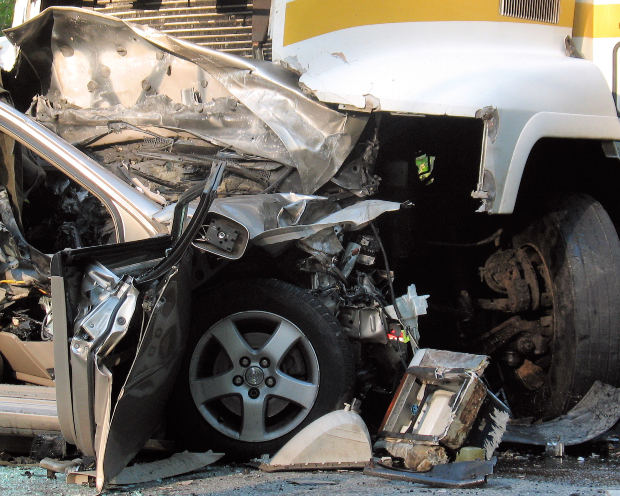
Speed-related Miami Shores car accidents and truck accidents are an especial concern. High-speed traffic accidents are more likely to cause fatalities and serious injuries, including brain injuries, burn injuries, and spinal cord injuries. This is because the force of a collision is considerably greater when a vehicle is speeding. When a higher-speed Miami Shores truck accident occurs involving a car and truck, the results can be even more devastating. Since the force of the truck is already so much greater than that of the smaller passenger vehicle, when speed is a factor it is even more likely that the occupants of the passenger vehicle will be seriously injured.

To reduce the risks of accidents such as these, many suggestions have been made to reduce speeding on roads and to make sharing the road safer. In 1987, a federal law was passed, for example, which allowed states to increase highway speed limits on rural interstate highways. At the time, the highways had speed limits of 55 mph and states were permitted to raise the speed limits to 65 mph. A few states decided to post different speed limits on these highways for trucks and different speed limits for cars – but does this make highways safer?

Speed limits on roadways are based on the idea of the 85th percentile. While many people assume that slower speed limits are safest, some research has shown that the safest speed is the one at which the majority (or about 85%) of traffic moves. Some studies have shown that when speed limits are posted lower or higher than what most drivers are driving, some drivers speed to reflect the speed at which they feel they should be driving while other drivers drive at the posted speed limit. This creates two sets of speeds, and this can cause reckless driving, tailgating, and other situations which lead to traffic accidents.

When trucks and cars share the road, therefore, some experts believe that both trucks and cars should travel at the same pace to prevent accidents. However, there are some issues with this. Some Miami Shores traffic accidents, for example, are caused because in many cases trucks and cars cannot travel at the same speed. Trucks may need to slow down and stop more often if they are making deliveries. Commercial big rig trucks also need to start slowing down much sooner than passenger cars do, as it takes longer for tractor trailers to brake. This can cause shifts in speed which, according to the 85th percentile idea, are unsafe.

There are other issues, too, which affect safe speed limits and trucks. A 2006 study at the University of Arkansas found that trucks that travel at lower speeds actually may be safer since they can maneuver and brake more easily than trucks which are going faster. Rather than supporting the 85th percentile idea, which suggests that uniform speed is best, the study found that a slower speed for trucks may be best – even when other vehicles are going faster.

Continue reading "Speed Limits and Miami Shores Truck Accidents " »

January 12, 2012

Cargo Shifts and Deerfield Beach Truck Accidents

According to the Federal Motor Carrier Safety Administration (FMCSA) Large Truck Crash Causation Study (LTCCS), cargo shifts are one of the most dangerous causes of truck accidents. Although they are not common occurrences, when cargo shifts do occur, they are very likely to cause a serious accident. In Deerfield Beach, traffic accidents caused by cargo shifts are likely to cause fatalities and serious injuries.

To understand why cargo shifts and resulting Deerfield Beach truck accidents take place, it is important to understand tractor-trailers. These larger commercial trucks have very high chassis, making the truck more likely to roll over and making stability essential. The cargo is the heaviest part of the truck, but the ability of the truck to stop, maneuver, and speed up is in the tires. When a truck attempts to move, the force of the move must be transferred through the truck, from the ground to the load. When a load is not carefully balanced, a Deerfield Beach rollover accident or cargo shift is the likely result.

In addition to incorrectly balanced loads, incorrectly secured loads are another common reason for cargo shifts. In a larger commercial truck, cargo needs to be very securely tied down or secured to prevent shifting. In some cases, loads are naturally more difficult to secure. For example, liquid loads naturally shift and move during transport. In these cases, special tanker trucks need to be used to ensure that the load shift does not lead to an accident.

Truck drivers are primarily responsible for a cargo load. They are expected to inspect the cargo during the trip and before the trip to ensure that it is safe. However, in a Deerfield Beach truck accident caused by shifting cargo, there may be multiple liable parties. For example, trucking companies are expected to properly train drivers so that drivers can inspect cargo correctly. In addition, loaders are expected to load and secure cargo correctly.

If you have been in a Deerfield Beach truck accident that you believe may have been caused by a cargo problem, it is important to consult with a qualified Deerfield Beach personal injury attorney. In many cases, where a commercial truck is involved in an accident, truck carriers have access to powerful insurance companies as well as teams of attorneys to represent them. You will need a qualified personal injury attorney who can investigate the accident, find all liable parties, and safeguard your rights.

Even in cases where a Deerfield Beach traffic accident seems fairly straightforward, where commercial entity is involved, the case may be more complex than you realize. Even simply finding all liable parties can be very important. For example, if a Deerfield Beach personal injury attorney is able to find multiple liable parties in your case, you can drastically improve your chances of getting a fair settlement that covers more of your medical costs, lost income, and other expenses. As well, a good attorney can help safeguard your rights and can ensure you do not sign away your rights when making an insurance claim.

Continue reading "Cargo Shifts and Deerfield Beach Truck Accidents " »

January 10, 2012

Could Cargo Theft Increase the Risk of Davie Truck Accidents and Other Injuries?

According to experts, commercial truck cargo theft is a serious and growing problem. In 2009 alone, thieves stole nearly $500 million worth of commercial truck cargo, representing a 67% jump in thefts when compared with 2008. In many cases, cargo is stolen while truckers step of their vehicle out to eat or rest. According to law enforcement, medical and pharmaceutical cargo as well as electronics are especially targeted by thieves, since these can easily be re-sold. Florida, Texas, and Georgia are considered among the highest-risk states for cargo theft.

Some experts believe that cargo theft may be fueled in part by economic woes. While the thefts are certainly a concern for trucking companies, who lose considerable amounts of money due to the crime, there is some concern that the thefts can also have a negative impact on public safety in a number of ways:

1) Possible injuries to truck drivers who want to protect themselves and their cargo. If truck drivers interrupt a theft in progress or attempt to defend their trucks, there is the possibility that thieves may attack the driver in order to steal the cargo, increasing the risk of injuries to the driver.

2) More focus on cargo safety can detract from truck safety. As truck carriers are forced to focus on cargo theft, they may have fewer resources to put towards truck safety and driver safety overall. In other words, the more carriers are focused on cargo theft, the less they can focus on driver fatigue, driver distraction, and other common causes of Davie car accidents involving trucks.

3) Thieves who steal large amounts of cargo may be driving with unsafe loads, increasing the risk of Davie traffic accidents. If thieves steal entire cargo loads off of trucks, they must then transport the cargo. If they do so in trucks, they may simply not have the skills to securely distribute and secure the load, increasing the risk of a Davie truck accident. In addition, if thieves steal flammable or hazardous cargo, they may cause a fire, toxic spill, or other dangerous situation if they do not know how to transport this type of cargo safely.

4) Thieves escaping from a crime scene may cause an increase in Davie car accidents as they are likely to speed.

5) Re-selling of some cargo goods may cause injuries. One troubling thing about cargo theft is that thieves specifically target pharmaceuticals as a form of profitable product. Unfortunately, when pharmaceuticals and other dangerous cargo are resold on the common market, there is no control over how they are used. Pharmaceuticals, taken for the wrong purposes or in the wrong doses can be extremely hazardous or even fatal. Similarly, hazardous cargoes, including fireworks, flammable materials, and others pose a danger when used incorrectly.

Continue reading "Could Cargo Theft Increase the Risk of Davie Truck Accidents and Other Injuries?" »

January 5, 2012

New Year, New Home? What You Need to Know to Prevent Palmetto Bay Moving Truck Accidents

In the New Year, many people make big changes in their lives. If your change involves moving to a new home, you may be interested in renting a truck to move your furniture and possessions to your new house. While renting your own truck can be a cost-effective option, it is not always the safest option. Each year, people are involved in Palmetto Bay traffic accidents while driving rental trucks.

The truth is, most motorists are not prepared for the dangers and risks of driving larger moving trucks. These trucks have more blind spots and handle much differently than a regular car, putting you at a much higher risk of a Palmetto Bay truck accident. In addition, some truck rental companies have poor records for truck maintenance. Many companies renting trucks have long lists of unsatisfied customers, some of whom claim that the companies rent trucks that are not kept in good condition. In past years, investigative journalists have found that some companies even move trucks from state to state to avoid costly repairs and maintenance on their fleets. The track records of some of these trucks may give you pause.

Luckily, there are ways to move safely. Where possible, leave the driving to someone else. Professional and experienced truck drivers can handle large moves and large trucks with ease, potentially saving you from a Palmetto Bay car accident. Professional movers can also pack your possessions carefully and are generally fully insured, so that if any injuries or any damage occurs during the move, the costs are covered. Many people feel that the costs of professional movers are very high, but the costs of a Palmetto Bay truck accident can also be very high. Before making a final decision, at least consider speaking with a tax preparer – if you are moving due to your job, the costs of the move may be partly tax-deductible, making movers more affordable.

If professional movers are not in your budget, there are still other options which allow you to have someone drive a moving truck for you. For example, you can rent a truck and hire a driver who can drive the truck for you. If you decide to do this, make sure that you speak with the truck rental company about insurance options. Another option is do-it-yourself services. These moving services will deliver a large container to your current home and you can pack the container with your possessions. Once you are packed, the company will transport the container to your new home, where you can unpack it. These services cost less than professional movers but do not require you to drive your own moving truck.

If you do decide to drive your own moving truck, at least take several precautions to ensure that your trip is safe. For example, book a truck that is large enough for all your possessions. Overloading a truck can cause brake failure and tire failure, so err on the side of caution. Next, make sure that you take the rental truck to a trusted mechanic before you load in anything. If there are any maintenance or safety issues, your mechanic can let you know so that you can contact the rental company to get a safer truck. Be careful to load the truck evenly and to secure your possessions in place to prevent them from shifting. Correctly loading the truck is important in preventing Palmetto Bay rollover accidents. Where possible, drive with a friend so that you can take turns driving and so that you can get help with blind spots and parking, if needed.

Continue reading "New Year, New Home? What You Need to Know to Prevent Palmetto Bay Moving Truck Accidents " »

December 29, 2011

Florida Authorities Work Hard to Prevent Miami Truck Accidents and Car Accidents at This Time of Year

According to Florida authorities, this time of year is one of the deadliest on Florida streets, with accidents both on primary and secondary roads. Unfortunately, this can be one of the riskiest times of the year for a Miami truck collision or car accident. Florida even has one of the unfortunate distinctions of being one of the states with the highest numbers of fatal accidents over the holidays, although the Florida Highway Patrol no longer forecasts fatal accidents for this time of year.

Florida officials will be taking part in a number of initiatives to reduce Miami traffic accidents at this time of year. For example, law enforcement authorities will patrol secondary and primary roads more vigilantly through the New Year, looking for drunk drivers, stranded drivers, and speeding motorists. Florida Highway Patrol is taking part in the Drive Sober or Get Pulled Over program up to January 2 to curb Miami drunk driving accidents and DUIs across the state. Unfortunately, Miami car accidents caused by drunk driving continue to be a serious problem. According to the Florida Highway Patrol, 35% of fatal traffic accidents in Florida between Christmas and New Year’s of 2010 were alcohol-related.

Many police authorities will be monitoring the streets more vigilantly over the holidays, even reducing time at home with their own families in order to keep the streets safer. According to public safety authorities, there are several things that people can do to keep safe in Miami through the New Year holiday:

1) Have a designated driver. A designated driver can ensure that you get home safely and ensures that you will not need to return the next day after a night out in order to get your car.

2) Call a taxi. Many taxi companies are extra-busy at this time of year and are working hard to meet demand. Keep some extra money in your wallet as well as a list of local taxi companies so that you can get home safely.

3) Rely on public transit. Using public transit to get to and from holiday events reduces your risk of Miami car accidents and is healthier for the environment. It is also a less expensive alternative to a taxi.

4) Call friends or family. If you cannot drive because you are tired or have been drinking, call someone for help.

5) Finish texts and emails before starting your car. In addition to cracking down on drunk driving over the holidays, Florida authorities also want to crack down on distracted driving. While there is no texting ban in the state, commercial drivers are not permitted to text and drive. Authorities will enforce that law.

6) Report aggressive or drunk driving by calling *FHP (*347). Reporting dangerous driving ensures that police can respond appropriately – and potentially prevent a Miami traffic accident.

Continue reading "Florida Authorities Work Hard to Prevent Miami Truck Accidents and Car Accidents at This Time of Year" »

December 27, 2011

Would a Universal Ban on Cellphone Use Prevent More Miami Truck Accidents?

Commercial truck drivers are not allowed to text and drive or use cellphones while driving. However, the National Transportation Board is calling for a far more wide-spread ban – one that would ban all drivers in all states from using portable electronic devices in all but emergencies. The ban would include hands-free devices as well. While many people believe that such a ban would help prevent Miami car accident, there are also at least a few reasons why it would help prevent truck accidents as well:

1) Truck drivers are not the only ones who cause Miami truck accidents. In many cases, distracted drivers of passenger cars cause accidents because they are not paying attention to the road. By banning electronic devices for all motorists, there is a chance that there will be fewer distracted drivers overall, potentially decreasing Miami traffic accidents – including truck accidents.

2) Light truck drivers and non-commercial truck drivers are still allowed to text and drive in Florida – even though these drivers can still cause deadly accidents. In 2010, a driver in Missouri sent 11 texts in 11 minutes, causing a highway pileup that injured 38 people and killed two.

3) The problem is not going away. Transportation Secretary Ray LaHood has said that the situation with distracted driving is getting worse, with about 50% of drivers between the ages of 21 and 24 admitting to texting or emailing which driving. According to the National Highway Traffic Safety Administration, one in about 1000 motorists at any given moment in 2010 was using a mobile device to surf the Internet, email, text, or engage in some other distracting activity. This represents a 50% increase in these activities compared to the last year.

4) Banning only some drivers from texting and driving is sending the wrong message. To send the message that texting and distracted driving is deadly, all motorists need to be banned from using mobile devices. Just banning commercial drivers makes it seem as though distracted driving is not allowed for commercial truck drivers, but is fine for everyone else.

5) The evidence of the danger is compelling. There is no longer any doubt that distracted driving kills. Studies by the National Highway Traffic Safety Administration and other experts and organizations attest to the dangers. Just as DUI was once legislated to prevent Miami drunk driving accidents and drunk driving accidents across the US, more needs to be done to prevent distracted driving accidents.

Of course, more needs to be done than just enacting laws. The NTSB has stressed that laws need to be enforced. Missouri already has a law which prevents drivers under the age of 21 from texting and driving, but in the 2010 Missouri accident, the 19-year-old driver continued to send texts and was not apprehended by anyone. Many authorities now automatically ask for texting and cellphone records to be preserved when they investigate an accident, so that they can determine whether distracted driving was a factor in an accident. However, more can be done to prevent distracted driving accidents in the first place.

Continue reading "Would a Universal Ban on Cellphone Use Prevent More Miami Truck Accidents?" »

December 20, 2011

Preventing a Miami Truck Accident During the Holidays

There are many more Miami trucks out during the holidays than during most times of the year, as demand for deliveries and merchandise increases at this time of year. Unfortunately, it can mean that there are more Miami car accidents involving trucks at this time of year. If you wish to prevent Miami truck accidents and traffic accidents, there are a few things you can do:

1) Avoid distracted driving. Driving distracted is dangerous at any time of the year, but it can be especially dangerous during the holiday season, when there is more traffic on the roads and a greater risk of Miami traffic accidents. At this time of year, it is even more important to put your mobile devices away and give 100% of your attention to the roads and to driving.

2) Give yourself plenty of time. With the holiday rush upon us, it is common to feel somewhat harried and pressured to get plenty of errands done. However, rushing can make it more likely that you will make driving mistakes that could lead to a Miami traffic accident or truck accident. Rushing can also make it more likely that you will drive aggressively or tailgate in order to get to your destination on time. A better solution is to reduce the number of commitments where you can during this time of year and give yourself extra time to savor the holidays.

3) Give trucks extra room. There are more trucks on the road at this time of year and with more trucks and more rushing on the roadways, you will want to give commercial trucks plenty of room. Remember: if you cannot see the truck driver in the driver’s mirrors, you are too close and the truck driver cannot see you. As well, be sure to leave extra room in cases where a delivery truck may be stopping and starting often in order to drop off deliveries.

4) Use extra caution in parking lots. Parking lots are dangerous because pedestrians, trucks, and passenger vehicles are all sharing the same space. You need to be especially vigilant about trucks and pedestrians in parking lots. While parking lot accidents are usually low-speed accidents, they can be quite serious.

5) Get plenty of rest and only head out to run errands when you are well enough to do so. The holiday season coincides with the flu season, so it is not unusual to be lacking in sleep and feeling under the weather just when you are feeling pressure to run many holiday-related errands. Feeling groggy and ill, however, can increase your chances of getting into an accident. Put off errands until you feel better and more rested. If you take over the counter medication or any medication to deal with seasonal illness, make certain that the medicine will not make you drowsy or sleepy.

Continue reading "Preventing a Miami Truck Accident During the Holidays" »

November 1, 2011

Miami Road Rage Can Lead to Truck Accidents

In 2006 and 2007, Miami was named by AutoVantage as the city suffering from the worst road rage in the country. Road rage can lead to aggressive driving and can contribute to Miami car accidents and truck accidents as well. Anyone who has seen an incident of road rage on the road knows that this type of rage is more than just someone's bad day. A trucker driving an 80,000 pound fully loaded commercial vehicle can cause a serious accident if they are making reckless decisions or poor choices due to road rage. Road rage leads to aggressive driving and contributes to Miami pedestrian accidents and car accidents.

According to experts, impatient drivers often become enraged drivers. Emotional driving can also lead to road rage, especially if a motorist is driving while stressed, angry, or upset. Lack of patience is one of the leading reasons for road rage, as impatient drivers often lose their temper due to simple traffic delays, congestion, and other unavoidable problems. Unfortunately, truck drivers need to work hard to stay patient. Many of them have tight deadlines to make and often feel frustrated if they are stuck in traffic or otherwise unable to do their jobs. Experts also suggest that driving while emotionally upset can lead to road rage. Having a bad day and then getting into the car can mean that simple traffic problems escalate into a serious situation. Most experts suggest driving only when you are calm, well rested, and prepared for the road.

Road rage can manifest itself in all kinds of ways. It can include gesturing, yelling, or swearing at another driver. It can include tailgating and other reckless driving behaviors. Gesturing, swearing, and yelling can distract other drivers and lead to a Miami bicycle accident or other traffic accidents. Reckless driving can be especially dangerous, particularly when it involves large trucks. Tailgating, cutting off trucks, and otherwise driving erratically can easily lead to a serious accident.

Road rage can be an especial problem when cars and trucks share the roadways. A passenger vehicle has little or no chance against a fully loaded commercial vehicle which weighs many times what the car weighs. Any accident between a passenger vehicle and a truck is likely to result in fatalities or permanent injury. Since preventing road rage can help prevent accidents, AutoVantage has several suggestions for preventing road rage:

1) Slow down. Driving more slowly and avoiding speeding helps ensure calm driving. Speeding tends to annoy other drivers and can lead to nasty confrontations. Slowing down overall can also help reduce the stress that often leads to road rage. That is, giving yourself plenty of time to get to your destination ensures that you are not rushing and upset if there are any delays.

2) Stay alert and careful. Although Florida has no texting bans for drivers, staying alert and driving cautiously are your best defenses against road rage. Staying alert ensures that you are not cutting off other drivers and causing dangerous situations or upset on the road. Staying alert also reduces your risk of causing a Miami traffic accident.

3) Stay courteous and think of other drivers. When sharing the road with others, consider how other drivers feel. Give them plenty of room, don't cut people off, and signal as a courtesy so that other drivers know what to expect from you.

4) Take a deep breath and gauge your emotions. Avoid driving when you are upset, and try to calm yourself before getting behind the wheel. Driving upset ensures that any small problem on the road leads to even greater upset and potentially road rage.

Continue reading "Miami Road Rage Can Lead to Truck Accidents " »

October 13, 2011

Do you Exercise Outdoors in Miami? Here is How to Stay Safe

Miami is filled with green spaces, trails, beaches, and many other outdoor areas that are perfect for recreation. There many joggers and bicyclists in Miami who choose to exercise outdoors. If you are one of them, keep in mind that you need to stay safe. While Miami has lots of pedestrians, it also has a higher than normal level of truck traffic. Since Miami is a port city and a major commercial area, thousands of trucks pour into the city every day. This increases the risk of Miami pedestrian accidents and serious accidents for those who choose to exercise outdoors. In order to stay safe, make sure that you:

1) Avoid exercising or jogging alone. Whether you are taking a bicycle ride or jogging, consider taking friends with you. Friends not only make exercising more fun, but they can also ensure that you are less of a target. If you are in a Miami truck accident or pedestrian accident while jogging or bicycling, your friends can also help you call for emergency medical personnel. If you cannot find friends to work out with, at least have a planned route, a cell phone, and let someone know where and when you will be exercising.

2) Choose your exercise routes carefully. Avoid exercising outside at the same time and location every day. As well, select safe, well lit areas for jogging and bicycling.

3) Make sure that truck drivers and motorists can see you easily. If you are jogging, wear reflective clothing. If you are on a bicycle, make sure that your bicycle has reflective tape and working lights. The more visible you are to drivers, the less likely you are to be in a Miami pedestrian accident. Visibility does not guarantee that you won’t be in an accident, but it does reduce your risk.

4) Carry a cell phone with you. Make sure that your cell phone is turned off, as distracted jogging or bicycling makes you more prone to a Miami bicycle accident or pedestrian accident. However, if you are in an accident, a cell phone can help you call for help quickly.

5) Carry your personal identification, including emergency contact numbers and any allergies you have or medications you are taking, with you when you are exercising. If you are severely injured, this information can help paramedics save your life.

6) Consider jogging or bicycling in areas that do not have truck or car traffic. Miami has a number of parks and beaches where vehicles are not allowed. These can be safer areas for walking, jogging, and bicycling, especially if you stay on them during daylight hours.

7) Avoid bicycling or walking distracted. Avoid listening to music, texting, or otherwise distracting yourself while you work out. Staying alert allows you to notice what is going on around you, and allows you to notice traffic as well as any warning signs that can help you prevent an accident.

Continue reading "Do you Exercise Outdoors in Miami? Here is How to Stay Safe" »

October 11, 2011

How Miami Drivers Can Stay Safe When Sharing the Road with Large Trucks

Miami drivers share the roads with bicyclists, motorcyclists, pedestrians, and all sorts of vehicles – including large commercial trucks. Commercial trucks can weigh 80 000 pounds when fully loads and most passenger vehicles do not stand a chance against a vehicle of that size. Each year, Miami car accidents involving trucks cause fatalities as well as serious injuries. Do not become part of that statistic. Learn how to drive safe around trucks:

1) Avoid a truck’s blind spots. Truck drivers can only see so much around the vehicle, so if you are following immediately behind a truck or are driving along the side of a truck, the truck driver cannot see you. In fact, any time that you cannot see the truck driver in the driver’s mirrors, he or she cannot see you. This means that he can swipe your vehicle or back up into you if you are driving too close.

2) Give a truck extra space when traveling behind a truck. Again, a truck driver cannot see you if you are directly behind the truck. Leaving an extra space ensures that the truck can see you. As well, if the truck has to stop suddenly – and many delivery trucks and other commercial trucks make frequent stops – you will have enough time to stop. If the truck needs to back up suddenly, that extra space can ensure that your vehicle is not hit.

3) If a truck is following too close behind you, get out of the way. When you can move over so that they can pass. Trucks take much longer to stop than passenger vehicles, so a truck tailgating you is a significant problem. If the truck driver needs to stop suddenly, he or she will rear end you if there is not enough room between vehicles.

4) Make lane changes carefully when sharing the road with trucks. Changing lanes rapidly is a risk, because trucks do not respond as quickly as passenger vehicles. When sharing the road with trucks, leave lots of space, use your signal lights well ahead of time, and avoid making sudden moves.

5) Do not engage an aggressive truck driver. While most truck drivers have extensive training and do their best to drive safely, any aggressive truck drivers can be an especial menace. You do not have a chance against an 80 000 pound commercial truck. If you see a truck driver behaving or driving erratically or dangerously, get out of the way and to safety. Then call authorities.

Unfortunately, even if you share the road safely, negligence or recklessness on the part of other drivers or on the part of truck drivers can make the road unsafe for you. If you are injured in a Miami truck accident, get immediate medical help and then call a qualified Miami personal injury attorney. The medical and financial outcomes of a truck accident can be devastating, and you deserve legal advice as well as support as you pursue a fair outcome.

Continue reading "How Miami Drivers Can Stay Safe When Sharing the Road with Large Trucks " »

October 6, 2011

Truck Tips from the Florida Department of Highway Safety and Motor Vehicles

A new initiative from the Florida Department of Highway Safety and Motor Vehicles could help prevent Homestead truck accidents – as well as traffic accidents throughout Florida. If you live in Homestead or anywhere in South Florida and own a truck, consider these safety tips to drive safely:

1) Keep an eye on your vehicle and yourself. While all drivers on the road have a responsibility to keep other motorists safe, truckers have an especial responsibility as their vehicles can cause even more damage in a Homestead car accident. Ensure that your truck is maintained regularly and responds as needed to help you avoid collisions. As well, ensure that you are in good physical shape to drive. Being well-rested, calm, and fit ensures that you can put your whole focus on the road.

2) Stay distraction-free. Distracted driving is a danger for all motorists, but light trucks have more blind spots, so drivers of these vehicles need to concentrate even harder on the roadway to stay safe.

3) Watch your no-zones. Be aware that your larger truck has more blind spots, and check your blind spots more often. Do not count on other motorists to stay out of your blind spots – many drivers are not aware of how many blind spots trucks have.

4) Drive sober. Homestead drunk driving accidents claim far too many lives. Never drive under the influence, and be sure to check over the counter and prescription medications for side effects; anything that may cause drowsiness is unsafe to use.

5) Leave lots of room. Trucks have more height and are therefore at an advantage when braking. Nevertheless, leave plenty of room for the car in front of you. If the motorist in front of you needs to brake suddenly, the extra room can help you avoid a rear-end collision.

6) Use caution in construction and work zones. Follow signs and slow down. Leave yourself extra room; with the blind spots on a light truck, you may need the extra cushion space.

7) Stay aware of road conditions. Check conditions before you leave, so that you can anticipate problems and hazards. If you see any problems on the roads, report the problem when you can. It is free to do so from your mobile device if you dial *FHP (that is,*347).

8) Give smaller vehicles plenty of room. Homestead bicycle accidents, motorcycle accidents, and pedestrian accidents are often fatal, especially when trucks are involved. Give pedestrians and bikers extra room, and be aware that riders and walkers can move and maneuver more easily than a truck. An extra cushion of room protects you and gives you a chance to maneuver if a rider or pedestrian makes a move that is unexpected.

Continue reading "Truck Tips from the Florida Department of Highway Safety and Motor Vehicles" »

August 18, 2011

Preventing Florida Drunk Driving Accidents and Truck Accidents

At this time of year, there are many end-of-summer parties with alcohol. The roads are also busier with tourists coming to Florida for one final holiday and trucks delivering back-to-school goods to stores. As well, there are many moving trucks on the road as the end of summer is a time when many college students are moving to campus and many families are moving ahead of the school year. Alcohol-fueled parties and extra traffic on the road are not a great combination, and they can mean Florida truck accidents and DUI accidents.

You can help prevent accidents at this time of year if you:

1) Plan your own parties carefully. If you hope to have an end-of-year party, prevent accidents by having a plan to get guests home safely. You can hire a designated driver or a van service for a low cost. You can arrange to have taxis to call. Plan to start scaling back servings of alcohol earlier in the evening, too, to help prevent DUI and other accidents. As well, remember that alcohol does not just lead to Florida drunk driving accidents; it also affects mobility and inhibitions, so that guests are more at risk of slip and fall accidents as well as other injuries. You could be held liable if you serve alcohol and a guest injures themselves at your party.

2) Consider an afternoon party. An afternoon weekend party allows you to enjoy the great weather and also allows you to avoid sending out guests late at night. Accidents are more common late at night, as guests are more tired and are more likely to lose control of the car. Late at night, there are also more trucks on the roads, making Florida truck accidents more likely. Sending guests home early also ensures that guests are not as tired and are not affected by alcohol as well, which can lead to poor decisions. Having an earlier party also makes it easier for guests to take taxis or the bus home.

3) Have a plan for getting home safely yourself. If you are headed to a party yourself, make sure that you have at least a few alternatives for getting home safely. Do not assume that you won’t drink and don’t assume that you can get home safely with a designated driver. You or your designated driver may end up being tempted to drink. Bring enough cash for a cab or a nearby motel or have a few friends you can call for a safe ride home.

4) Talk to your loved ones about Florida drunk driving accidents. Make sure that they know they can call you for a ride home and ask for the same privilege. If you have teens who are just starting to drive, have then sign pledges not to drive drunk or distracted.

Continue reading "Preventing Florida Drunk Driving Accidents and Truck Accidents" »

August 16, 2011

Could Red-Light Cameras Help Prevent Florida Truck Accidents?

New research and statistics from the Department for Transport in the UK suggests that red-light cameras have not improved accident rates in that region of the world, but have helped cities secure speeding fines. A camera installed in Oxfordshire saw ten fatalities and five car accidents between 1997 and 2002. Before 1997, when the camera was installed, the same intersection had not seen any fatalities or car accidents for five years. In 2009, that camera caught over 3600 drivers exceeding the speed limit. In 1997, another red-light camera was installed at an intersection in Cambridgeshire after the intersection saw five minor collisions. In 2010, that same intersection saw two serious injuries and five smaller injuries as well as 1027 drivers exceeding the speed limit. Of 89 red-light cameras installed in Humberside, 19 of those cameras saw an increase fatal pedestrian accidents after the cameras were installed.

The statistics – and others like them, published in the US, shed concerns about red-light cameras and their use in the US. Red-light camera companies and advocates of the cameras claim that the cameras can help reduce Florida truck accidents and car accidents by forcing drivers to slow down. The cameras are installed on intersections and can automatically capture anyone exceeding the speed limit. Some cameras also capture other traffic violations, such as running red lights or making illegal turns. When the cameras capture a violation, they can determine the driver responsible from the license plate number. The driver is then sent a ticket, with the time, date, and location of the alleged violation.

Red-light cameras have hit other speed bumps in the US, however. Some states have questioned the very legality of the system because the tickets are sent automatically whereas in many states traffic tickets must be written up by police officers or must be served by process servers. In some cases, drivers have successfully been able to argue their case in court in order to have their tickets dismissed. Others have simply ignored their tickets and have left it up to red-light camera companies to pursue payment.

The real concern, however, is whether red-light cameras can really help prevent Florida car accidents and traffic crashes. Advocates of the cameras claim that the cameras are ever-present and so discourage drivers from violating rules because drivers know that they will get caught automatically. As well, advocates of the cameras claim that red light cameras have been proven to reduce car accidents. Indeed, some US-based studies have suggested that red light cameras can reduce traffic violations at an intersection. As well, red light cameras can theoretically help free up law enforcement professionals and resources for more serious concerns. Opponents suggest that the cameras are a cash-grab for cities who want to increase revenues with traffic tickets.

Continue reading "Could Red-Light Cameras Help Prevent Florida Truck Accidents?" »

August 4, 2011

Florida Truck Accidents on the State's Beaches

Volusia County, like many counties in Florida, uses large Beach Patrol trucks to keep beaches safe. However, this year, one of the trucks was involved in a collision with a sunbather, shining the spotlight on Florida truck accidents on beaches. There have been three Beach Patrol accidents in the county since 2010, all involving collisions between trucks and sunbathers.

Miami Beach also has trucks patrolling its beaches. However, in that county, only higher-ranking patrol officers are permitted to drive the patrol trucks on beaches. As well, there is a limit of four trucks on the beach at one time. As well, some patrol officers use ATVs (all terrain vehicles) for their patrols, instead of the larger trucks. ATVs have the advantage of offering improved visibility, especially since they are lower to the ground than standard beach patrol trucks.

Across Florida, beach driving has been studied extensively after two children were killed in 2010 by private vehicles driving on beaches. While many people enjoy driving their trucks or passenger cars on Florida beaches, the combination of sunbathers and vehicles is a poor one. Sunbathers are often not visible to drivers of cars because they are lying down. And sunbathers are often not on the lookout for drivers on a beach. Children, especially, are vulnerable to accidents because they may not know enough to move out of the way of an oncoming vehicle amid the excitement of a day at the beach.

While beach patrol drivers get training to drive on the beach – something that drivers of private vehicles do not get – the accidents involving beach patrol trucks suggest that new rules may need to be considered. Volusia County authorities are investigating the accidents and will likely examine the drivers and vehicles allowed on beach patrol.

Critics say that the beaches could be made safer if private vehicles and larger beach patrol trucks were removed from beaches entirely. If the larger trucks were used to get cars out of sand only, that might help reduce some of the Florida truck accidents involving these vehicles, some have suggested. The larger beach patrol trucks have poor visibility during right turns and U-turns, whereas smaller vehicles and ATVs would ensure better visibility and potentially smaller risks. One local newspaper has suggested placing two officers in each beach patrol vehicle, so that one officer could look for sunbathers and check blind spots as well.

While it is possible that banning private vehicles from beaches would also help prevent Florida car accidents on the state's beaches, there is a long tradition of beach driving in Florida and many oppose any attempts to ban the practice. Beach driving is also a part of the tourism industry in many cities along the coast, which has helped create a lively debate about the future of beach driving.

Continue reading "Florida Truck Accidents on the State's Beaches " »

July 19, 2011

Expert Tips for Preventing Florida Truck Accidents

If you drive a passenger vehicle, your car stands no chance against a large tractor trailer in a collision. Each year, many lives are lost due to Florida truck accidents, but there are things you can do to help protect yourself and your loved ones, according to law enforcement and other experts:

1) Stay alert to existing Florida car accidents and truck accidents. Listen to the radio or check the traffic reports before leaving home, so that you can avoid congested areas and accident sites – which have higher risks of accidents. The Florida Department of Transportation’s (FDOT) has even launched a new Florida 511 iPhone application as a free download on iTunes. The app provides free real-time traffic information for Florida's major roadways and can be used with GPS to help drivers keep track of accidents near their current location.

2) Keep your car in good condition. When your car is well-maintained, it handles more reliably, allowing you to get out of dangerous situations. Check your car's owner manual to determine what basic maintenance your vehicle needs and then schedule the needed maintenance.

3) Avoid distracted driving. You cannot drive near trucks safely if you are texting or talking on the phone while driving. Trucks take longer to stop and may make unexpected stops. You need to be alert, and that means putting your mobile devices away while you are on the road. Avoid other distractions, too. Changing CDs in your car, having animated conversations with passengers, or eating while driving can all be fatal mistakes.

4) Drive sober – and well rested. Both fatigued driving and drunk driving affect your motor skills and your response times. To prevent a truck accident, you may need to act fast, and you cannot do that if you are not at your best. Florida drunk driving accidents and accidents caused by fatigued drivers are very preventable, so work to prevent these accidents from happening to you.

5) Get some good coaching. If you have had more than one or two near-accidents or Florida car accidents in the past year, it is a good idea to get some additional driver training. Most drivers believe that their driver education ends when they get their license, but in fact the world's best drivers – including race car drivers and stunt car drivers – get continuing education to improve their skills. If you need to, consider a refresher course, a racing school course, or defensive driving course. In some cases, you may even be able to enjoy a car insurance discount as you enjoy safer driving.

6) Make provisions for commercial trucks. Driving near other passenger vehicles is not the same as driving near large commercial trucks. Large trucks require more room, and it is important to ensure that truck drivers can see you. Learn to respect the larger vehicles on the road and you will keep yourself and your loved ones safer.

Continue reading "Expert Tips for Preventing Florida Truck Accidents" »

July 1, 2011

Could a Lowered Rate of Fork Lift Truck Accidents in the UK Help Prevent Similar Florida Truck Accidents?

The Health & Safety Executive has reported that since the Fork Lift Truck Association's National Fork Lift Safety Week initiative was launched, UK has seen fatal fork lift truck accidents decline by two thirds. In 2006/7, 16 workers in the UK died due to such accidents, while in 2009/10, five workers were killed in these accidents. This is the third improvement in statistics.

Experts in the UK have reported that fork lift truck accidents are among the most dangerous accidents for workers. Even with the recent reductions in the number of these fatal truck accidents, there were 369 serious but non-fatal fork lift truck accidents in the UK in the past year – an average of one serious accident per year. Many of these accidents were life changing amputations, brain injuries, and other such serious incidents.

Can Florida learn from the UK example to reduce the instances of Florida truck accidents? There certainly seem to be a number of take-away lessons from the UK example:

1) Truck accidents can be reduced through effort. Although many people see accidents as an unavoidable reality of life, the UK example shows that the number of accidents overall can be reduced with concerted effort. Statistics prove that over three consecutive periods, the number of fatal truck accidents dropped. The statistics were also adjusted for the economic downturn, so it is not only the recession that is helping to reduce the accident rates in the UK.

2) Education is key. The Fork Lift Truck Association's National Fork Lift Safety Week was introduced in 2008 to help educate workers and the public about safety and to promote safety best standards. This program is credited for helping to reduce fatal fork lift accidents across the UK.

3) Training is important. The Fork Lift Truck Association's National Fork Lift Safety Week focuses on different safety topics every Safety Week. Recently, the Fork Lift Truck Association has been focusing on training, with the slogan "more skills, less spills." According to the Fork Lift Truck Association, poor training increases the risk of serious accidents.

Continue reading "Could a Lowered Rate of Fork Lift Truck Accidents in the UK Help Prevent Similar Florida Truck Accidents?" »

June 30, 2011

Truck Proposals Could Change Rates of Florida Truck Accidents

Federal lawmakers are considering transportation bills which would, over the next few years, change a number of things about the trucking industry. Some experts are concerned about a proposal in the bills which would allow higher weight limits and which would permit trucks on more roads across the country. Some experts are concerned that such changes could affect the rates of Florida car accidents and truck accidents on the road.

The bills would increase truck weight limits from 80 000 pounds to 97 000 pounds for single-trailer commercial trucks on state highways and interstate roadways. Trucks with two or three trailers would be permitted up to 100 000 pounds. As well, trucks with two or three trailers will be allowed the entire national highway system rather than on interstate roads.

According to the Transportation and Infrastructure Committee Chairman, the bills could be put to a vote before committee by July 12. The suggested legislation would also place a tax on trucks over the weight limit. This money would be placed in a fund and distributed to states to assist with road repairs and bridge work.

There are many concerns about the proposed changes. Many legislators, for example, have pointed out that cars are currently getting smaller as more consumers look for fuel economy in their passenger cars. Combining smaller cars with larger trucks could create even more devastating Florida car accidents involving cars, whereby smaller cars would have no chance against very large commercial trucks. There is also concern that the larger trucks would have very large blind spots and would not be able to safely share the roads with motorcycles, bicyclists and others who use the road system.

There is also a concern that the larger trucks could create problems on residential streets. While the proposed legislation allows very large trucks only on the national highway system, when a section of the system is closed due to an accident or another cause, traffic is often rerouted through residential areas. There is a concern that 100 000 pound trucks would be on residential streets in such cases, posing the risk of Florida pedestrian accidents and other types of traffic accidents.

Other experts have noted that much larger trucks could create load problems and could make the roadways deteriorate faster, due to the weight and force of the larger vehicles. Those in the trucking industry have noted that improved technology in the trucking industry would potentially help offset some of these problems. The Transportation and Infrastructure Committee also notes that allowing the proposed changes would allow businesses to be more competitive and efficient, which would beneficial to the economy.

Continue reading "Truck Proposals Could Change Rates of Florida Truck Accidents " »

June 27, 2011

Preventing Miami Truck Accidents With Design

A blogger writing for TransitMiami, has recently written about the large number of accidents along Biscayne Boulevard. These accidents often reportedly include high speeds and in recent months have resulted in damage to light poles and storefronts. According to the blogger, some of the problem stems from design and suggests some of the ways that Miami truck accidents and car accidents along this road could be prevented:

1) Changing the design speed of the road. The design speed of Biscayne Boulevard in Upper East Side (where many of the accidents have been taking place) is 45 mph, and the posted speed limit is 35 mph. The TransitMiami blog suggests a design speed of 35 mph.

2) Re-striping scenario in order to bring back parallel parking to the street. The MiMo Business Improvement Committee (BIC) has made this suggestion to District 6 Secretary for the Florida Department of Transportation. Creating parallel parking in the area would encourage cars and trucks to slow down, BIC believes, and would also provide a layer of protection for pedestrians, helping to prevent Miami pedestrian accidents in the area.

3) Adding traffic calming design features. According to the City of Miami’s Comprehensive Neighborhood Plan (MCNP), such devices can include wide sidewalks, different lane widths, medians, landscaping, roundabouts, lighting; and signage. All of these features make the area more like a neighborhood and less like a highway, encouraging motorists to slow down.

4) Enforcement. While improved design can help reduce the speed and therefore the number of accidents, enforcement is still an important part of the equation, ensuring that motorists obey the rules of the road. An enforcement campaign targeting the area specifically could help prevent accidents along the street.

Continue reading "Preventing Miami Truck Accidents With Design" »

June 23, 2011

North Miami Hopes to Reduce Florida Truck Accidents with Ordinance

North Miami has proposed an ordinance which would require food trucks, which appear regularly at such events as the Biscayne Triangle Truck Round-Up, to get licenses and permits. The proposal, if successful, would charge food trucks $167 yearly and $50 one-time fee to pay for a background check. Currently, food trucks in the area do not need permits or checks to operate in the area. Although there are no statistics suggesting that food trucks contribute to Florida truck accidents, some have raised concerns:

1) The industry is less regulated than the commercial trucking industry. Commercial trucks are subject to many rules. Drivers are usually trained and must obey rules about hours of service and other laws. Food trucks, however, are less regulated, and the North Miami ordinance would at least require background checks on those operating the trucks.

2) The trucks congregate in parking lots. This has the potential to cause accidents as trucks back up or pull into the lot. There are no reports of such accidents, but some feel that the sheer numbers of food trucks could create such accidents.

3) The trucks usually require some form of fuel for food preparation. While most operators take precautions to ensure a safe work environment, some people point out that parking lots are a bad place to set up food trucks that include additional sources of fuel. Any fire in such a truck has the potential to cause a serious conflagration.

4) The trucks attract pedestrians. Some worry that the trucks could contribute to Florida pedestrian accidents because they attract large numbers of pedestrians. As well, since these trucks often set up shop near parking lots or in parking lots, the trucks can produce more pedestrian traffic in areas with many cars, creating a large risk for Florida car accidents.

Continue reading "North Miami Hopes to Reduce Florida Truck Accidents with Ordinance" »

June 18, 2011

Florida Truck Accidents Involving Delivery Trucks

While large commercial tractor trailers get a lot of attention in discussions of Florida truck accident risks, delivery trucks are also a danger on the state's roads. Delivery truck accidents can lead to the same serious injuries and to fatalities. As well, there are a number of factors that make delivery trucks especially dangerous:

1) There are a great many delivery trucks on the roads. In addition to major courier services, most cities have local couriers as well as a host of local companies offering delivery service. The large number of delivery trucks increase the odds that these vehicles will be in accidents.

2) Driver training varies widely. Commercial truck drivers are required by federal law to meet specific training requirements and to commit to specific job-safety standards (such as hours of service regulations). This is also true of delivery truck drivers working for large national companies. However, local companies with drivers operating smaller trucks often are not required to adhere to such regulations.

3) The pressures of the job. Delivery truck drivers – especially drivers working for couriers – are under a great deal of pressure to deliver packages under very strict deadlines. This can lead to mistakes, speeding and carelessness that can lead to serious accidents.

4) Delivery trucks often deliver items to residential areas. While commercial tractor trailers largely drive on highways, delivery trucks generally make deliveries to residential addresses – including addresses in areas where a driver may not be familiar with a specific neighborhood. This can increase the risk of Florida pedestrian accidents involving such trucks.

Continue reading "Florida Truck Accidents Involving Delivery Trucks" »

June 14, 2011

Will Plans to Change Cargo Ship and Train Access Affect Florida Truck Accident Rates?

New plans by the government could improve the economy in Florida while also possibly helping to prevent Florida truck accidents. A new government plan will divert some cargo traffic from trucks to a Florida East Coast Railway line that runs between Hileah and the Port of Miami. The move – slated to cost millions – could remove up to 5% of truck traffic between the cities and could reduce downtown Miami traffic by 1.4%. Since heavy traffic is considered a contributing factor to both Florida car accidents and truck accidents, one can’t help but wonder whether the move will help reduce collisions.

Changes to the railway line could be finished by 2012, thanks to a $22.7 million grant from the government and a further $10.9 million from the Florida Department of Transportation. Miami-Dade County will contribute $4.8 million to the project. The rail will help to get rid of 60 000 truck trips each year between Miami and Dodge Island.

The Miami Access Tunnel project is also underway. The two tunnels now being constructed will connect the port of Miami to Watson Island. This project, too, will help remove some truck traffic and other types of traffic from Miami. According to the Florida Department of Transportation, 16 000 vehicles each day travel through Miami's downtown to get to or from the port. This includes about 4, 480 cargo trucks, or about 28% of all traffic. Each year, this amounts to 1.16 million trucks and 4.16 million vehicles traveling in the downtown area due to the Port of Miami. Diverting some of that traffic could have an impact on traffic and therefore the risk of collisions.

Experts believe that up to 80% of passenger cars traveling from the Port of Miami and to the area can start to use the Miami Access Tunnel once that is completed. However, there are plans underway to make Miami and Florida in general a cargo capital, and there are concerns that this could mean more traffic in the area over the long term. When the Panama Canal expands in 2014, more cargo and larger ships could eventually start heading for Florida. Experts believe that by 2015 and 2016, the Port of Miami will start to see a large increase in the number of cargo ships destined for the port.

So far, no research has been published about how the changes in the Panama Canal may affect truck traffic or Florida truck accident rates across the state. The construction of the Miami Access Tunnel and the changes to divert more traffic to railways may help to offset some of the traffic, but hopefully more research will be done to determine the effects of the changes on overall traffic and traffic accident rates.

Continue reading "Will Plans to Change Cargo Ship and Train Access Affect Florida Truck Accident Rates?" »

June 8, 2011

Help Your Teen Avoid a Florida Truck Accident

Teen drivers across the state have higher rates of Florida car accidents, and experts believe that this is the case because younger drivers simply have less experience when it comes to dealing with common road hazards and situations. For example, many teen drivers have little experience sharing the road with trucks. To ensure that your teen has the skills to avoid a collision with a truck, make sure that you:

1) Have your teen sign a no-distracted-driving and no-drinking-and-driving agreement. You can find such pledges on the Mothers Against Drunk Driving (MADD) website or you can devise your own. It’s important to really explain to your teen the dangers of drinking and driving or driving distracted, as these behaviors greatly increase the risk of a Florida truck accident.

2) Go over the rules of driving around trucks. Better yet, take your teen out in a car and teach them the basics of allowing extra room behind a truck and the basics of passing a truck safely. Do not just assume that your teen was taught about sharing the road with trucks in driver's education. Your teen may not have absorbed that information enough to apply it easily.

3) Pay for extra training for your teen or ask your teen to get extra training before giving your new driver car privileges. Most teen driver programs cover a lot of ground and some include minimal in-car instruction. Extra defensive training or extra in-car lessons with a qualified instructor can be very helpful in giving your teen some extra skills and experience.

4) Limit the behaviors that can cause your teen driver to get into a car accident. When you allow your teen to drive, consider placing a limit on the number of passengers your teen can have in the car while driving. As well, if you live in a small community, consider limiting your teen to non-highway roads for a few weeks or a few months. Once your teen gains confidence and experience on smaller and less busy roads, you can then permit your teen to share the road with trucks.

Continue reading "Help Your Teen Avoid a Florida Truck Accident" »

May 25, 2011

How to Spot a Truck Driver Who May Cause a Drunk Driving Accident

The only way to tell for sure whether a truck driver is driving under the influence is to let a police office administer a sobriety test or a blood alcohol test. However, according to the Florida chapter of Mothers Against Drunk Driving (MADD), there are a number of signs that a truck driver is drunk and may cause a Florida drunk driving accident:

1) Rapidly changes speed, generally changing speed quickly and without reason
2) Follows too closely or tailgates other vehicles
3) Weaves across lanes of traffic or across the roadway
4) Near-misses, such as almost colliding with an object or another vehicle
5) Erratic stopping and starting
6) Does not drive on the road
7) Uses signals incorrectly or makes other basic driving errors.
8) Swerves
9) Does not use headlights at night
10) Drives very slowly (more than 10 mph under the posed speed limit)
11) Responds slowly to traffic conditions or traffic signals
12) Turn illegally or too sharply
13) Drives on the wrong side of the road

If you see a truck driver exhibiting any of these signs, gain a safe distance and call the authorities. You could help prevent a truck accident. Even if the driver is not under the influence, the behaviors listed above are dangerous and could cause a collision. It is helpful to authorities if you can provide details about the truck – such as the license plate number – but never put yourself in danger to get this information.

Continue reading "How to Spot a Truck Driver Who May Cause a Drunk Driving Accident" »

May 23, 2011

Renting a Moving Truck? Here's What You Need to Know About Florida Truck Accidents

Many rental agencies rent out large trucks for do-it-yourself moves. If you are trying to save money, this can seem like a great alternative to the costs of hiring professional movers. However, this sort of move can also lead to a Florida truck accident. To stay safe, follow these tips:

1) Get the moving van inspected and get some training. Many moving truck rental have poor reputations for failing to maintain their fleets. You can read about company safety records online, but it is a good idea to get the truck inspected before you pack it, just in case. You may also want to get at least an hour or two of training with an instructor to get familiar with the truck. Many driving training schools can offer you two hours of training for less than $50, which will not add to moving costs substantially.

2) Keep a log of your hours on the road and your rests. If you are renting a very large moving truck, you may be required to maintain a log of time traveled, distance traveled, and any rest stops taken. If you are required to keep such records, keep them carefully; you could face serious legal problems if you fail to keep these records.

3) Get the right truck for your weight of cargo – and stop at weight stations as needed. Overloading a truck because you don’t want to go into the next larger truck size can mean that your moving truck is more prone to rollovers, tire blowouts and even brake problems. Most truck rental companies will help you estimate how much truck you need. If you need a very large truck, make sure that you stop at weight stations, as you are required to do by law.

4) Secure your cargo carefully. Pack your belongings carefully any use plenty of tie-downs to keep them secure in the truck. If your cargo moves or shifts as you drive, you will have a harder time controlling the truck and you will increase your chances of being in a Florida car accident.

5) Consider alternatives. If you need to move many items and will require a very large truck, think twice. Very large trucks are hard to maneuver and are not really intended to be driven by passenger car drivers with no truck driving experience. There are many low-cost alternatives. For example, you can rent the low-cost truck yourself and hire a professional driver to drive it for you. You can also combine moving costs with another family headed for the same destination. Another option is to take advantage of one of the DIY packing companies. The company will drop off a large freight container at your home, which you can pack at your leisure. A professional truck driver will then drive the container to your destination.

Continue reading "Renting a Moving Truck? Here's What You Need to Know About Florida Truck Accidents" »

May 20, 2011

Driver Fatigue and Florida Truck Accidents

In June 2009, a Miami truck driver who was fatigued caused a severe truck accidents that resulted in a multiple-vehicle pileup, ten deaths, and six injuries. The National Transportation Safety Board (NTSB) determined that the accident was caused by fatigued driving, with the driver suffering from mild sleep apnea as well as "circadian disruption" caused by the driver's shift schedule.

Unfortunately, the incident was not isolated. Every year, Florida truck accidents as well as car and truck accidents across the entire country, are caused by fatigued drivers. According to Deborah A.P. Hersman, chairman of the NTSB, the 2009 crash shows that three new federal rules are needed to help prevent these types of truck accidents:

1) A fatigue management system. According to the NTSB, such a system would include set scheduling practices, attendance rules, education of truck drivers and the public about warning signs, medical screening and treatment for sleep apnea and other sleep-related conditions, the creation of rest environments for drivers, and new commuting policies. This comprehensive system would address some of the more common causes for driver fatigue.

2) Event recorders. The NTSB has also recommended recorders such as video cameras in cabs. While these might not help prevent accidents, the NTSB notes that such devices would help investigate accidents. The NTSB also believes that event recorders would help carriers evaluate driver performance and this might ostensibly help prevent Florida trucking accidents as well as accidents across the country.

3) A collision warning system. Airplanes in Florida use Traffic Alert and Collision Avoidance Systems (TCAS) to help prevent Florida aviation accidents and the NTSB believes that similar technology can help prevent truck accidents. The systems work by providing auditory warning signals when other vehicles are close.

Continue reading "Driver Fatigue and Florida Truck Accidents " »

May 18, 2011

Preventing Florida Truck Accidents: What to Do When You See an Unsafe Florida Truck Driver

If you are sharing the road with trucks as a motorist, there are times when you may see unsafe drivers on the road operating large commercial trucks. Unsafe drivers can cause serious Florida truck accidents, but if you notice a driver who does not appear to be safe, there are several things you can do:

1) Learn to recognize the signs of an unsafe driver. Unsafe truck drivers speed, drive erratically, weave, or gesture and yell aggressively. They may drive past red lights or otherwise ignore traffic signals and signs or may make obvious mistakes on the road.

2) Get out of the way. Your first priority is to stay safe. That means remaining calm and getting plenty of distance from the truck. Avoid engaging the driver in any yelling or shouting or exchange of gestures; that can make an aggressive driver even more aggressive.

3) Get the details. If you have a passenger in the car with you, ask them to take down the details of the truck, such as the license plate number, any identifying details, the time and location, and a description of the truck driver. Do not get too close to the truck to get these details – they are not worth an accident. If there is no one in the car with you, pull over to write down the details.

4) Call police. If the driver is in imminent danger of causing an accident or if you believe that the driver is drunk, call police immediately; you may be helping to stop a Florida drunk driving accident. Reporting a dangerous driver can help ensure that others are not harmed by his or her recklessness.

5) Report the driver to the FMCSA. There are rules in place to keep unsafe drivers off the roads. You can call the Safety Violation Hotline, created by The Federal Motor Carrier Safety Administration (FMCSA), to report unsafe bus and truck drivers. The number is 1-888-368-7238. Many trucks also have the phone numbers of their carriers listed right on the truck. You can call the carrier to report an unsafe driver as well.

Continue reading "Preventing Florida Truck Accidents: What to Do When You See an Unsafe Florida Truck Driver " »

May 16, 2011

Load Problems Can Lead to 18-Wheeler Truck Accidents in Florida

In 2009, there were 3,163 people killed in truck accidents across the country. Overwhelmingly, the victims were either pedestrians or other motorists. Passengers of passenger vehicles accounted for 70% of these deaths and bicyclists, motorists, and pedestrians accounted for 14% of these fatalities. Load problems – including loads that shift inside the truck or fall out of the truck – are a leading cause of truck accidents in Florida and across the country.

When loads are not secured or are too large or heavy for a truck, the truck is at a greater risk of rollovers. Too-large loads also put undue stress on the vehicle's brakes and tires, making tire blowouts and even brake failure more likely. A truck that has a too-heavy load or a load that is not correctly secured is more difficult for the driver to control and is therefore more likely to be in an accident. A regular commercial truck, for example, takes 40% more time to stop than a passenger car. When a truck is overburdened, it can take even longer to stop, making accidents harder to avoid.

There are several laws designed to help prevent Florida truck accidents caused by load issues. In 2002, for example, the Federal Motor Carrier Safety Administration (FMCSA) created new rules about securing loads. New rules require trucks to secure cargo in such a way that it does not shift so that it impedes the normal operation of the vehicle. When traveling on public roads, commercial trucks are also required to secure their cargo and loads so that the cargo does not fall, spill, or blow from the truck.

In addition, there are rules in place about the minimum number of tie-downs required to secure a cargo. These rules require that cargos which are no more than 1100 lb and 5 feet or less in length have at least one tie-down. Items up to ten feet require a minimum of two.

Commercial trucks are subject to strict weight limits and weigh stations across the US and Canada require all large trucks to stop and get weighed. Trucks above safe weight limits are subject to fines. As well, trucks carrying unsafe or dangerous cargo are subject to special requirements and limitations. In addition, in cases where a truck carrying a load or cargo that has been unsafely secured causes an accident, victims have the right to pursue legal action against the carrier, and even the driver of the vehicle.

Continue reading "Load Problems Can Lead to 18-Wheeler Truck Accidents in Florida " »

April 29, 2011

Truck Weight Regulations and Florida Truck Accidents

One of the reasons why trucks are so dangerous and contribute to so many Florida car accidents each year is the sheer weight of the vehicles. The large size and weight of commercial trucks such as tractor trailers or semi trucks makes these vehicles unwieldy and slow to respond on the road. In the case of an accident, even small mistakes can lead to serious injuries. As well, drivers of these vehicles are often limited in their ability to drive defensively; since commercial trucks respond far more slowly than passenger vehicles, it is harder to avoid an accident.

Congress passed laws in 1973 to make trucks safer and to reduce the risks of truck accidents. One of the laws restricted the size and weight of loads. For travel in between states, load weights were limited to 40 tons (80 000 pounds). However, overweight permits and oversize permits are available to permit larger trucks on the road in certain circumstances. As well, the weight limits for steer axles are 12 000 pounds while the limits of dual axles are 34 000 pounds and the limit on single axles is 20 000 pounds.

There are federal limits which limit the size as well as the weight of trucks. On all federal highways, trucks can tow 2 trailers of 28 feet or one trailer of 48-feet. Trucks must be no wider than 102 inches on these roads.

States have their own rules and limits on truck weights, as well. Some states, for example, impose seasonal weight limits. Michigan is one such state. Other states allow some oversize trucks or overweight loads, as long as truck carriers meet specific safety requirements.

The reason for these federal and state weight limits is simple. The heavier a truck is, the greater a danger it is on the road. This is because in a truck accident a heavier truck creates a greater impact upon collision and is therefore more likely to cause serious damage and possible fatalities. As well, heavier trucks are more likely to rollover and are more difficult to manage, making it more likely that even an experienced truck driver will be in an accident. Finally, heavier trucks cause more wear on tires and brakes, making it more likely that these systems will fail prematurely.

To enforce federal and state weight limits, there are weight stations in every state. Trucks are supposed to automatically stop at these stations when the stations are open to allow authorities to check for weight violations. Unfortunately, some trucks continue to flout the rules and avoid the weight stations, creating unnecessary danger on the roads.

Continue reading "Truck Weight Regulations and Florida Truck Accidents " »

April 13, 2011

Could Rising Fuel Prices Actually Lower Florida Truck Accident Rates?

For most customers, rising fuel and diesel prices are bad news. Not only are the costs of transportation quickly rising with fuel prices, but the costs of consumer products are increasing due to the costs of fuel. Most products sold to consumers need to be transported by truck or by other vehicles which use diesel. As fuel prices increase, companies are increasing fuel surcharges and consumers are facing higher costs at retail centers, too.

According to the trucking industry, diesel prices are close to $4 a gallon, a dollar increase over the same time last year. While no one likes higher prices, could the increase in costs actually have a hidden benefit? Many carriers are looking for ways to reduce fuel use in order to keep prices competitive, and many of the methods used to lower fuel consumption may actually also help prevent Florida truck accidents:

1) Better route planning. Most truck companies are now trying to find the most efficient ways to get from point A to point B, with an eye to fuel efficiency. However, faster routes can also mean less occupied routes, which could mean fewer Florida car accidents involving trucks. If companies avoid busy roads in order to reduce idling and slow speeds, there will be less competition on roads and potentially fewer accidents.

2) Less idling. Idling uses up fuel, so it is expected that carriers will be more strict about idling. However, idling can also help reduce pollution and can help make the streets safer and cleaner.

3) Better truck maintenance. Commercial trucks that need repairs are more likely to be fuel-inefficient. They are also more likely to have flaws – such as brake trouble or undetected tire defects – that can lead to an accident. By improving care of vehicles to save on fuel costs, carriers may also be making their fleets safer.

4) Using specific tires, air foils, mud flaps and other equipment. Using equipment designed to make trucks more fuel-efficient may not automatically make trucks safer. However, more attention to trucks can help carriers notice – and fix – any problems that could lead to an accident.

Continue reading "Could Rising Fuel Prices Actually Lower Florida Truck Accident Rates?" »

April 8, 2011

Proposed Recorders to Reduce Florida Truck Accidents Caused by Fatigued Driving?

US Senators Lamar Alexander (R-Tennessee) and Mark Pryor (D-Arkansas) are supporting proposed federal laws which would make it mandatory for most commercial tractor trailers to have electronic on-board data recorders installed on board. According to industry experts, this law, if passed, might help prevent truck accidents caused by fatigued drivers. The bill, known as the Commercial Driver Compliance Improvement Act, might go into effect in 36 months if passed.

Experts say that electronic data recorders might help prevent fatigued driving and the accidents caused by sleepy drivers because the devices would identify the driver, record the location of the truck in real time, and keep track of driving time as well as stop times. If a truck were pulled over, the devices would allow police to access the information.

Experts note that these features would help prevent accidents in a number of ways. The tamper-proof recorders could keep note of how long drivers were driving and would allow drivers to keep tabs on compliance with hours of service laws. By allowing police to access the data, recorders would also make enforcement of such laws simpler. Plus, in the event of a Florida truck accident or an accident anywhere, the information recorded would help establish liability, potentially.

According to at least one study, fatigued drivers may contribute to as many as one out of every seven fatal trucking accidents. There are currently about 500 000 trucking companies in the industry, and while implementing the recorders would be expensive for the industry, experts note that such recorders are the only reliable way to ensure that hours of service rules are being followed.

Currently, drivers are required to keep a log book of hours driven and hours rested, but these books rely on self-reporting, which has been proven to be fallible and easy to falsify. The recorders can also be useful in identifying which driver was in which truck at which time, something which can be useful for law enforcement and investigators after any Florida car accident involving a truck.

Continue reading "Proposed Recorders to Reduce Florida Truck Accidents Caused by Fatigued Driving? " »

March 30, 2011

Top Causes of Truck Accidents – and How to Avoid Them

Statistics show that many truck accidents take place in rural areas, often on the weekends. Truck accidents cause nearly 5000 deaths across America each year, as well as billions of dollars in damage and many thousands of injuries. Accident reports state that the top reasons for truck accidents include:

1) Driver fatigue on the part of the truck driver. There are many regulations -- including hours of service regulations -- which ensure that truck drivers get adequate rest. Nevertheless, sleep apnea, illness, work pressures, tight deadlines, and a host of other reasons can cause a truck driver to be tired, and even to fall asleep at the wheel. While there's not a great deal you can do to ensure that truck drivers get adequate rest, you can ensure that you yourself get plenty of sleep and rest before you drive. Driving tired -- whether you drive a truck or a passenger vehicle -- is always dangerous. Another thing you can do to help prevent accidents caused by driver fatigue is to write to your representatives and support legislation which encourages long rest periods for truck drivers.

2) Drugs and alcohol. Many accident reports show that truck driver errors are often caused by drugs and alcohol. Florida drunk driving accidents -- whether they involve trucks or cars -- steal far too many lives each year. If you see a truck driver driving erratically, contact your local authorities to report the problem. As well, never get behind the wheel if you have been drinking yourself.

3) Failure to follow the rules and regulations of the roads. Both truck drivers and passenger car drivers are responsible for accidents when they fail to obey traffic laws. Whether it's speeding, obeying stop signs, or following proper rules for passing, merging, and turning, it's important to get excellent driver training and to follow the rules at all times.

4) Improperly loaded and secured loads on trucks. Truck loads can be heavy, and if they are not loaded correctly and secured, they can roll around on the truck, increasing the chances of rollovers and causing a weight imbalance which can cause drivers to lose control of the vehicle. While there's not a great deal you can do to ensure that carriers follow proper rules for loading and securing cargo, you can keep an eye on trucks on the road, avoiding any that seemed to be top-heavy or weaving.

5) Distracted driving. This is another problem for both truck drivers and passenger car drivers. Whether distracted driving is caused by changing a CD, using a mobile device while driving, or talking too animatedly with passengers, taking your eyes and mind off the road can be deadly. Commercial truck drivers are not permitted to use mobile devices while operating their vehicles. If you see any truck driver who's driving unsafely because they are using a mobile device, pull over and record them to your local authorities.

Continue reading "Top Causes of Truck Accidents – and How to Avoid Them " »

March 28, 2011

Avoid Being in a Florida Truck Accident

More than 500 000 truck accidents occur on US roads and highways annually. Like all states, Florida sees its fair share of car accidents caused by trucks. To avoid becoming a statistic, make sure that you follow these best practices for road safety when sharing the road with trucks:

1) Avoid trucks' blind spots. All trucks have significant blind spots, but this is especially true for big rigs and tractor trailers. A good rule of thumb is that the truck driver cannot see you unless you can see the driver in their side view mirror. If you can't see the driver, speed up or slow down until you have a safe distance from the truck.

2) Give trucks plenty of extra room. Many Florida car accidents involving trucks are caused by passenger vehicles following trucks too closely. Trucks take much longer to stop than passenger vehicles, so most experts recommend that passenger vehicles stay a minimum of 20 car lengths behind large tractor-trailer trucks. Giving yourself extra room allows you to see around the truck, allows the truck driver to see you, and gives you both plenty of room and time to react in case of an emergency.

3) Pass trucks carefully. Once you have passed a truck, don't move back into the lane until you can see the truck's headlights in your rearview mirror. If you cut in too quickly, you may not be giving the driver enough time to stop in an emergency.

4) Be aware of trucks around you. Obviously, Florida drunk driving accidents are a major cause of fatalities and serious injuries. However, anything that distracts you can be a potential hazard on the road, all the more so when there are large trucks around you. When you see a truck, be extra vigilant. If the truck is weaving or at an unusually, get out of the way. Being aware of trucks around you also ensures that you don't brake suddenly or otherwise act in a manner that is dangerous.

Continue reading "Avoid Being in a Florida Truck Accident " »

March 16, 2011

What Else Can be Done to Reduce Florida Truck Accident Rates?

According to both the National Highway Traffic Safety Administration (NHTSA) and The American Trucking Association (ATA), fatal truck accident rates continue to drop, as do personal injuries resulting from truck accidents. In 2009, there were 1.17 fatalities involving trucks per 100 million driven miles, the lowest rate since 1975. According to the NHTSA, there were 3 380 truck accident fatalities across the US in 2009, compared with 2 245 in 2008.

According to The American Trucking Association, statistics show that the trucking industry is getting safer, but agree that more can be done to improve overall safety. For example, the ATA is currently asking the government to allow programs which give incentives to truck companies that install safety technology. Tax incentives and other incentives, the ATA argues, would encourage carriers to install the latest technology that can help prevent accidents. Some of this technology, for example, creates alerts when truck drivers drive too fast or drive too long without taking breaks. This alerts carriers when drivers break the rules and makes it harder to circumvent federal rules which are designed to make trucking safer.

The ATA also recommends creating a national clearinghouse to streamline blood alcohol and drug test results. According to the organization, this would help coordinate information, so that drivers with poor records could not simply move to another state in order to avoid career problems in their home state. A national clearinghouse, according to the ATA, would help the industry track drivers with drug and alcohol problems, offer better treatment, and help catch repeat offenders.

Further, the ATA recommends advanced notification systems to target drivers with problems. Current systems, according to experts, allow drivers with repeat offenses and repeat problems to find themselves on the road again and again. Drivers and carriers sometimes go to great lengths to ensure that drivers remain on the road. Advanced notification systems, the ATA argues, could help alert carriers and authorities when a driver has multiple near-misses, multiple accidents, or other problems. These problems could then be addressed before the driver is allowed to return to the road.

Florida, too, could make changes to help make trucking safer in the state. Legislation is already proposed to ban texting and driving, which could help prevent Florida car accidents involving trucks caused by distracted drivers. As well, Florida could work on legislation which could help support federal efforts to prevent Florida truck accidents and accidents across the country.

Continue reading "What Else Can be Done to Reduce Florida Truck Accident Rates?" »

March 14, 2011

Safety Practices and Policies Alone Won't Prevent Florida Trucking Accidents

When Florida trucking accidents happen, legislators often call for new laws and regulations. While policies are useful in preventing Florida drunk driving accidents and other types of accidents and while safety practices instituted by the trucking industry have helped to prevent many accidents, these steps alone are not enough. In order to really help prevent more Florida car accidents involving trucks, it is important to move beyond reactive practices to more proactive practices.

Most safety policies focus on violations and post-violation action rather than focusing on preventing problems in the first place. That is, most policies are created as a response to existing problems and current violations. They are looking back at the mistakes already made. Many safety experts believe that the trucking industry needs to look forward to anticipate problems and create holistic solutions to these problems.

For example, it is expected that Florida will see more and more trucks on the road as industries boom. The state will also see more extra-large trucks as a result of legislation passed last year to allow larger and heavier trucks on the road. While no accidents have yet been reported from this change, now is the time to address the change and to take steps to help prevent any future accidents. For example, investing in new tire technology would help the industry avoid trucking accidents caused by tire defects. This will become especially important as trucks increase in size and weight load.

Another way to become more forward-looking is avoid too much attention on incident rate leads. These tend to look back, just like safety policies, rather than looking forward to future problems. Of course, incident rate leads and safety policies are important. However, to truly create greater safety on the road, we must look beyond these issues and anticipate problems and address them in a forward-thinking way.

Drivers of course play a significant role in preventing Florida truck accidents. Training drivers extensively and well to anticipate problems and to become part of the solution is important. When drivers are given a greater voice to improve safety and their concerns are heard, good things can happen. Truck drivers want to help prevent accidents; giving them more leeway to take action to prevent accidents can help prevent collisions.

Many carriers have incentives based on lack of injury, but this, too can backfire. Drivers may be less likely to report injuries or possible injuries if it means discipline or lack of incentives, and this can mean more drivers driving unwell. Rewarding the right behaviors means rewarding safety and a commitment to safety, not rewarding lack of accidents. Rewarding additional training and any action taken by the drivers to remain safer simply may make more sense.

Continue reading " Safety Practices and Policies Alone Won't Prevent Florida Trucking Accidents" »

March 11, 2011

How the Trucking Industry And Carriers Can Create a Safety Culture

In many industries, the term "safety culture" is a buzzword and a key goal. Broadly, safety culture means creating an environment in which safety is an essential part of all tasks and business matters. Creating a safety culture is important because it can help reduce accidents and injuries. To help prevent Florida truck accidents, the trucking industry and local carriers may wish to work to create the type of safety culture than many other industries are creating.

Most experts agree that in order for safety culture to be effective, industries need to see culture as actionable. That is, it's easy to talk about a safety culture as something abstract, but companies need to create a culture rooted in specific steps so that it is easy to implement. For example, the trucking industry has taken steps to create a safety culture by banning texting and driving all across the country. Safety must be translated into steps of action in order to work.

Most experts also agree that safety policies alone do not mean safety culture. While it is important to have safety rules, in other words, rules alone will not create a culture of safety. A safety culture needs to go well beyond rules and regulations to work. The problem with many safety policies is that they are top-down. That is, authorities in an industry impose rules and everyone else is expected to follow them. This creates directives, not a culture. To create a safety culture that prevents Florida car accidents and truck accidents, industry authorities need to work with truck drivers and even the drivers of passenger cars to create solutions that involve everyone.

In order to work, safety culture must mean integration. That is, a safety culture includes all levels of a company or industry and it involves everyone. In the trucking industry, everyone must be held accountable for safety and safety must become a priority at all levels – from driver training to loading and unloading of trucks to truck maintenance and tire manufacture.

Safety cultures are not created overnight. In many cases, they begin with a goal to improve safety and with a few policies. Many industries dedicated to implementing a culture safety do so over time, working with employees and other stakeholders to gradually make safety a larger and larger focus across the board. As the trucking industry continues to do this, hopefully the number of Florida car accidents involving trucks will decline.

Continue reading "How the Trucking Industry And Carriers Can Create a Safety Culture" »

March 9, 2011

Preventing Driving Error Can Help Prevent Truck Accidents

Many Florida truck accidents – and indeed many Florida car accidents -- are attributed to "driver error." In many cases, this general term simply means that a driver had no intention of harming anyone but has made a mistake which has resulted in an accident. Most experts agree that such accidents are highly preventable.

To prevent traffic accidents caused by driver error, it is important to first eliminate causes of error. Many factors can make a driver more prone to mistakes. For example, a driver who is taking cold or flu medication that results in drowsiness is more likely to make mistakes behind the wheel, even if the medication is not a controlled substance. If a driver is sleepy or ill, he or she is also more likely to cause a Florida car accident due to error. Similarly, a distracted driver can make mistakes simply because he or she is not alert enough to notice possible hazards. Eliminating drowsy driving, distracted driving, and driving while ill means that drivers who are well and alert are behind the wheel – and focused, healthy drivers are less likely to make mistakes.

Another way to eliminate driver mistakes is to improve and increase truck driver training. In many cases, driver error is caused simply by lack of experience on the part of the driver. Experienced drivers make fewer mistakes, typically, simply because they are more familiar with a wide range of driving experiences and know to respond appropriately. Truck driving training can mean that drivers have the skills to avoid potentially tragic mistakes. Truck training also means more truck driving experience. Drivers who take additional training are also enjoying more experience in controlled conditions – which means they are more prepared for the road.

Many driver mistakes can also be prevented by creating an environment of safety for drivers. That is, having reasonable work deadlines and sensible schedules ensures that drivers can care for themselves and can therefore be in better shape to avoid mistakes on the road. Carriers and the trucking industry can help create an environment of safety and prevent truck accidents by continuing to focus on safety and driver comfort.

Another way to prevent driver errors and the accidents they cause is to make it easy to focus and stay error-free. In many cases, drivers make mistakes because their minds and eyes are not 100% on the road. Drivers who are focused on the task at hand are less likely to make mistakes because they are not distracted. Banning texting and driving for drivers is an important first step. Carefully screening drivers to ensure that they can focus on one task for extended periods of time is another potential step to help prevent distracted driving and accidents.

Continue reading "Preventing Driving Error Can Help Prevent Truck Accidents" »

March 7, 2011

Why It’s Not Enough to Focus on Commercial Trucks When Trying to Prevent Florida Truck Accidents

When most news programs report on truck accidents, they report on commercial trucking accidents. It is true that commercial trucking accidents are often very serious or fatal due to the large size of the vehicles. As well, commercial trucking accidents usually are legally very complex, since there are usually a few liable parties.

However, there are other types of Florida trucking accidents which receive less attention but which can still cause fatalities and serious injuries. For example, much less is written about rental truck accidents, although this is a topic that deserves serious attention. Many companies rent trucks – even large trucks – to customers without truck driving licenses. In many cases, these trucks are rented to individuals who are moving. Lately, even building supply stores have been offering short-term truck rentals to customers who want to get building supplies home.

Unfortunately, truck rentals pose quite a few problems. In most cases, drivers who have driven nothing but passenger vehicles are allowed to drive these trucks – some of which can be quite large and unwieldy – with no training, instruction, or help. While rentals no doubt save customers money, many experts do not think they are safe. Due to the fact that customers renting these large trucks do not have experience with larger vehicles, it can mean that even good drivers with no record of Florida car accidents can easily get into a collision with these trucks.

The safety record and maintenance of these trucks has also been an issue. Several investigative journalists have looked into the safety records of trucks offered for rent in this manner and have found all sorts of troubling problems. Some investigative journalists have discovered aging fleets while others have found that trucks cannot pass a mechanic's inspection. Lawsuits and claims that these companies know about mechanical problems just add to the issue.

Another common problem is the prevalence of light trucks and the role they play in accidents. More drivers and car buyers are selecting light trucks when buying a vehicle. In fact, in some cases, buyers say that the perceived safety advantages of these trucks influence their buying decisions. However, light trucks still can and do mean Florida truck accidents. These trucks can mean more blind spots when compared with passenger vehicles. Some light trucks also have high rollover rates and other known problems, all of which can contribute to Florida truck accidents.

Continue reading "Why It’s Not Enough to Focus on Commercial Trucks When Trying to Prevent Florida Truck Accidents" »

March 4, 2011

Could Safety Devices Be Causing Florida Truck Accident Fatalities?

Studies conducted by The Insurance Institute for Highway Safety (IIHS) show that a popular truck device used to increase safety may actually be causing hundreds of fatalities each year. According to the study, truck safety guards may actually be causing fatalities through decapitation in car accidents involving trucks.

The unusual thing is that truck safety guards are in fact designed to help prevent the very accident them seem to be making worse. The guards are designed to help prevent underride accidents, or accidents in which a car slips underneath a truck. The guards are supposed to ensure that cars cannot slide under the truck and the guards are approved to help prevent injuries by the US.

Despite this, the IIHS study found that in three of six tests, truck safety guards in fact lead to decapitations and other serious injuries in an underride accident. According to the IIHS, the study shows that the trucking industry needs to make changes to prevent these accidents. In some cases, researchers found that the guards actually made the accidents much worse and effectively ensured that in an underride accident there would be no survivors.

Part of the problem, according to researchers, is that truck safety guards are attached to a truck with hardware. In some tests, this hardware appeared to fail, so that during the force of an impact, the hardware did not hold, rendering the guard ineffective. As well, the study found that the NHTSA mandates no testing of truck safety guards, which means that trucking companies can have faulty guards with no inspections and no consequences.

The IIHS researchers made a few recommendations as a result of the study. For example, they recommended that the NHTSA institute rules ensuring that truck safety guards are strengthened and new hardware or new systems for ensuring that the guards are securely attached to trucks. Some trucking industry experts are supporting the proposed changes. Currently, the NHTSA is reviewing its rules regarding truck safety guards, but the review may not be complete until next year.

Across the country, over 400 people die annually in underride accidents – the very accidents which truck safety guards are designed to prevent. Many Florida truck accident and Florida car accident fatalities are also attributed to underride accidents. Such accidents may be preventable with better truck safety guards, as even high safety-rated cars tested by the IIHS tested poorly with the problematic guards, All cars are currently vulnerable to these types of accidents.

Continue reading "Could Safety Devices Be Causing Florida Truck Accident Fatalities?" »

March 2, 2011

Signs of Possible Driver Problems Which Can Lead to a Florida Truck Accident

According to The Hartford Insurance Company, there are several signs that a driver may no longer be safe for the road. Recognizing and acting on these signs early may help prevent Florida truck accidents and Florida car accidents:

1) Signs of confusion. Stopping in traffic for no clear reason, confusing brake and gas pedals, getting lost in places that were once familiar, delayed response times, moving into the wrong lane and difficulty maintaining a position in a lane can all indicate a problem. According to the Hartford Insurance Company, these may be the signs that an elderly driver, especially, is struggling with the basics of road safety. They may indicate problems caused by dementia, stroke, and other problems that affect neurological function. Other symptoms of these problems include confusion at exits and increased agitation when driving.

2) Traffic accidents and violations. These can be a sign of vision problems, aggressive driving, fatigue, distracted driving, or other problems. However, ticketed moving violations or warnings, multiple Florida car accidents, running red lights or stop signs, and other reckless behavior is a clear sign that a driver should not be on the road. Multiple near-misses or violations, especially, are a sign of a more serious underlying problem. Luckily, this is one sign that is likely to be taken seriously by carriers because it affects truck companies' insurance costs.

3) Not noticing important things. Parking inappropriately can mean not noticing parking signs and cues. Hitting curbs or other objects, failure to notice other cars or activities or failure to notice traffic signs can all indicate a serious problem. A lack of ability to notice important driving cues can mean vision problems. distracted driving, or fatigued driving. In any event, leaving this problem unchecked is very likely to result in a Florida truck accident.

4) Poor judgment. Difficulty in making turns, difficulty anticipating potentially dangerous situations, difficulty estimating distances, and similar signs can mean that a driver's judgment is affected. This could be due to alcohol and drug use, distracted driving, fatigued driving, and a host of other problems. However, it is a serious problem. All drivers, and especially truck drivers, rely on their experience and judgment when operating a vehicle. With this judgment affected, accidents are very likely.

5) Aggressive driving. Speeding, lack of signally, frustration and yelling, honking at other cars, and a failure to follow rules of the road are all signs of aggressive driving. Aggressive driving can be caused by poor anger management, emotional problems, or even frustration at an underlying problem. Aggressive drivers take risks which can lead to serious accidents, however, and need to be taken off the road.

6) Low confidence in driving skills. Relying on a "copilot," driving slowly, riding the brakes, and driver anxiety can all point to a lack of confidence. While not as serious as aggressive driving, excessive cautiousness and lack of confidence can also lead to traffic accidents. In some cases, younger drivers or under-qualified drivers may experience low confidence. Additional training can often help resolve this issue.

Continue reading "Signs of Possible Driver Problems Which Can Lead to a Florida Truck Accident" »

February 21, 2011

Could Wildfire Season Mean More Florida Truck Accidents?

According to National Weather Service and fire safety professionals, Florida may see an unusually severe wildfire season as lack of rain contributes to very dry conditions. Broward County currently has the driest ground conditions, although Palm Beach County, Martin County and Collier County also have very dry conditions, ripe for fire. According to the National Weather Service, drought in South Florida "severe" and can result in wildfires that pose health hazards and lead to Florida truck accidents and car accidents.

In Florida, wildfire season usually takes place between March and May, when dry and hot conditions make fires likely. Fires can be sparked by virtually any hazard, including cigarettes, bonfires, hot cars or trucks, lightning, and other factors. In parts of Miami-Dade County, Broward County and Palm Beach County, homes are nestled close to natural areas. This can easily cause wildfires to spread from forests and natural areas into residential areas, according to experts.

Wildfires are also a serious hazard for trucks and cars. Wildfires cause ash and other forms of air pollution which reduce road visibility considerably. Every year that wildfires are severe, many Florida truck accidents and car accidents are the result. In 2006, for example, Broward and Palm Beach counties saw five Florida car accidents each day as wildfires raged.

According to the Florida Division of Forestry, smoke and ash can descend on the roads, creating poor visibility, but also slick surfaces (especially when combined with chemicals used to douse the flames). As well, for truck drivers, the smoke can cause health problems. Smoke includes of water vapor, carbon monoxide, carbon dioxide, fine particles, hydrocarbons, and other substances. It can trigger an allergic reaction, asthma attacks, and other serious problems. When these problems strike a driver on the road, a car accident or truck accident could result.

The Environmental Protection Agency reports that smoke from wildfires can cause burning eyes, runny noses and even bronchitis. It can additional exacerbate respiratory and heart disease. A truck driver driving through an area affected by wildfire may not be able to see the road clearly and may suffer health problems from the smoke which makes it even more difficult to drive safely. While car drivers can choose to remain home, truck drivers may need to drive in these conditions to meet deadlines.

Continue reading "Could Wildfire Season Mean More Florida Truck Accidents?" »

February 16, 2011

Florida Truck Accidents Linked to Drowsy Driving

According to The National Highway Traffic Safety Administration, 100 000 accidents each year as well as 1,550 fatalities and 71,000 injuries are due to driver fatigue. Drowsy drivers also cause $12.5 billion in losses annually across the country. Sleepy truck drivers are especially a risk, because the truck driver's life style encouraged poor sleep and off hours, which can make sleepiness worse. As well, truck drivers are responsible for very large vehicles which can do substantial damage in a Florida truck accident.

The National Highway Traffic Safety Administration has launched a number of educational programs that have one clear message: sleepy driving is the same as impaired driving. In fact, research proves it. Drivers who drive drunk have the same delayed reaction times and impaired motor skills and drivers who drive tired. If we want to stop Florida drunk driving accidents, we also have to get serious about fatigued driving.

According to The National Highway Traffic Safety Administration, several types of drivers are at high risk:

1) Young male drivers under age 26.

2) Workers who work long hours or who work shift work. According to The National Highway Traffic Safety Administration, workers on the night shift have six times the risk of being in a collision when compared with traditional workers. The bad news is that truck drivers often do take on shift work in order to meet tight deadlines, which means that they are at greater risk.

3) Long haul drivers and commercial truck drivers. According to The National Highway Traffic Safety Administration, fatigue is a contributing factor to 15% of all truck accidents.

4) People who have sleep disorders which are untreated or undiagnosed. These drivers are seven times more likely to fall asleep when driving than the average driver.

5) Travelers – especially business travelers – who are experiencing jet lag or who must travel or drive for long periods of time.

According to The National Highway Traffic Safety Administration, there are many things that drivers can do to cut down on fatigued driving accidents. Getting good sleep and having good sleep habits can go a long way towards eliminating risk. As well, traveling with a friend and taking breaks every few hours can also help prevent accidents due to fatigue. Of course, avoiding any alcohol and any medications that may make you feel drowsy is also important to preventing collisions.

Continue reading "Florida Truck Accidents Linked to Drowsy Driving" »

February 14, 2011

Preventing Florida Truck Accidents in Work Zones

According to the Florida Department of Transportation (FDOT), the cast majority of Florida truck accidents in work zones are preventable. The agency has launched its Work Zone Safety campaign to raise awareness of the issue and to help prevent truck accidents and workplace accidents. The FDOT's efforts may be paying off, as workplace collisions have been decreasing. In 2008, there were 93 fatalities in Florida construction zones, compared to 137 in 2005. However, there is still room for improvement. According to FDOT, everyone can help by:

1) Walking and driving through work zones more carefully. According to FDOT, most of the fatalities in the state's work zones occur due to Florida pedestrian accidents or car accidents. Try to avoid driving or walking through a work zone. If it cannot be help, stay alert, follow signs, maintain good communication with the workers on the job, and proceed slowly.

2) Use extra caution when driving at night. According to FDOT, more than 50% of the fatal collisions which occur in Florida's work zones take place after dark. Poor visibility can make it easier to collide with work equipment and can make it easier to fall into a hole dug by work crews. If you need to pass by a work zone after dark, don't be casual, even if the work zone is empty. Use your lights and slow down so that you can see the warning signs in place.

3) Don’t mix alcohol with driving. Drunk driving is dangerous any time, but it can be especially risky in a work zone. FDOT reports that Florida drunk driving accidents account for almost one in four fatal work zone crashes.

4) Slow down. Even if you think you can drive at full speed by a work zone, you can't. It pays to be patient; work zones are often highly unpredictable environments. A truck may pull out in front of you at any minute as it does its work task or a worker may inadvertently walk in front of your car. According to FDOT, over half of all work zone accidents are related to speeding.

Continue reading "Preventing Florida Truck Accidents in Work Zones" »

February 11, 2011

How Elderly Drivers Can Help Prevent Florida Truck Accidents

While many elderly drivers can and do drive safely, elderly drivers do face some additional challenges when sharing the road with trucks. For example, many elderly drivers have medical conditions which can affect their driving. According to AARP, there are several things that elderly drivers can do to help prevent Florida truck accidents:

1) Maintain good communication with healthcare providers. Talk to your pharmacists about how your medication and over-the-counter medication can affect your driving. Visit your doctor and eye doctor regularly to maintain good health. If you have been diagnosed with a medical condition, be sure to discuss with your physician how the diagnosis may impact everyday activities, such as driving.

2) Keep in mind that disabled parking spaces and truck zones are often in the same area. Many Florida car accidents occur because of this. In many cases, trucks must pull up very close to stores and businesses. At the same time, many businesses provide disabled parking spaces near their businesses. When reversing or parking, stay extra alert for trucks.

3) Take extra training. Refresher courses and courses intended for elderly drivers help you shape up your skills and can even mean discounts on your insurance costs. As well, refresher training helps you to adjust to changing traffic patterns, new legislation changes and road rules, and the changing driving environment.

4) Make sure that you and your car are ready for the road. Keep yourself in good physical condition and avoid driving if you feel unwell or if you doctor has told you to avoid driving. Keep you car in good shape so that it is ready to respond quickly if you need to avoid a collision. If you need special items or gadgets for your car to help you drive safely, get these as quickly as you can.

5) Get evaluated often. If you have had a serious health issue or if it has been some time since you have been evaluated for driving skills, talk to a driving instructor. Many instructors offer special evaluations for elderly drivers and those who have faced challenges. These evaluations can help you determine whether you can safely drive and can help you address any bad habits which can put you at risk of a Florida car accident.

Continue reading "How Elderly Drivers Can Help Prevent Florida Truck Accidents" »

February 9, 2011

Drug Testing is Designed to Prevent Florida Truck Accidents

According to federal regulations, all truck drivers operating commercial vehicles that transport more than 16 passengers or that have a CGVWR greater than 26,000 or that are transporting hazardous materials must be tested for drugs and alcohol. Testing is overseen by the Department of Transportation (DOT) and the only drivers exempt are those that operate commercial vehicles on private property. Testing can help prevent Florida car accidents involving trucks and can help reduce the instances of Florida drunk driving accidents. There are six situations in which truck drivers may be tested:

1) As part of pre-employment screening. Federal regulations require that commercial truck drivers operating on a public road must be tested and must receive a negative result. Drivers who test positive generally must re-submit to testing and have difficulty securing employment.

2) After an accident. After an accident that results in a fatality as well as after any serious accident or traffic citation that results from any injury, commercial truck drivers must be tested. In these cases, the tests must be administered within 32 hours (for drug tests) or within 8 hours (for blood alcohol tests). These tests are designed to determine whether an accident was caused by DUI and can be used to determine the driver's level of liability.

3) Random tests. Throughout the year, commercial truck drivers may be asked to take part in random drug tests. Drug tests may be administered even when a driver is off duty or at home. Drivers are subject to blood alcohol level tests during work or immediately after or before duty. Generally, once drivers are notified that they are being asked to submit to a random test, they must immediately go to the testing location for testing. Delays can be interpreted as a denial to take the test and denials to take part in random tests or any drug or alcohol testing is considered the same as testing positive under 49 CFR 40.191.

4) If there is reasonable suspicion of impairment. Drivers who appear to be abusing drugs or alcohol can be asked by DOT supervisors to submit to testing. This decision must be based on concrete evidence, such as odors, driver behavior, slurred speech, or the appearance of the truck driver.

5) If a driver has completed the "return-to-duty" process. If a driver refuses drug or alcohol testing or tests positive, he or she is required to complete a rigorous "return-to-duty" process, which includes testing or retesting.

Continue reading "Drug Testing is Designed to Prevent Florida Truck Accidents " »

February 7, 2011

Pedestrians Can Help Prevent Florida Truck Accidents

Florida pedestrian accidents involving trucks are usually tragic. Pedestrians have almost no protection against the sheer size and force of a large commercial truck and can often not get away quickly enough to prevent serious injury and fatality in a collision. Florida truck accidents involving pedestrians are especially prevalent near intersections, on worksites, and in parking lots. According to the FMCSA (The Federal Motor Carrier Safety Administration), pedestrians can do their part to prevent these accidents by:

1) Making eye contact first. Pedestrians can be all but invisible to truck drivers and trucks have many blind spots. Never walk behind a truck, along the side of a truck, or cross in front of a truck until you make eye contact with the driver and get acknowledgment from the driver.

2) Staying in pedestrian-safe zones. Walking in crosswalks and on sidewalks is much safer than trying to walk on the road or trying to cross without a crosswalk. If you try to cross the street without a crosswalk, a car may be able to stop in time, but trucks take much longer to brake and may not be able to stop in time to prevent a serious accident.

3) Staying alert for trucks. Keep in mind that trucks may sometimes swing up onto sidewalks when making wide turns. Some truck drivers park up on curbs in high-traffic areas to get out of the way of traffic. Keep alert and look about you so that you will notice trucks backing up, turning, or coming near you. Avoid listening to music, using mobile devices, or distracting yourself when out walking in areas with truck and car traffic. For a more leisurely walk, stick to walking trails.

4) Staying visible. In bad weather and at night, pedestrians may not be very visible. Wearing light and reflective clothing can help, but carrying a flashlight is the best way to stay visible, according to the FMCSA. Keep in mind that commercial truck drivers often travel at night, so you are more likely to encounter truck traffic, even once car traffic lessens for the evening.

Continue reading "Pedestrians Can Help Prevent Florida Truck Accidents" »

February 4, 2011

What Motorcyclists Can Do to Prevent Florida Truck Accidents

While many Florida truck accidents take place when cars and trucks collide, each year Florida motorcyclists are seriously injured or killed in collisions with trucks. For motorcyclists, truck accidents are especially dangerous because motorcyclists simply have fewer barriers and protections between themselves and the truck in a collision. In most cases, Florida truck accidents involving motorcyclists are fatal accidents. However, according to the FMCSA (The Federal Motor Carrier Safety Administration), there are several things that motorcyclists to reduce their risk of a serious collision with a truck:

1) Wear a helmet. According to the FMSCA and most experts, wearing a helmet is the single most important thing that motorcyclists can do to prevent the risk of sustaining serious brain injuries in an accident. Most fatal motorcycle accidents are fatal because the motorcyclist sustains a serious brain injury. However, many Florida brain injuries can be prevented by the use of safety measures – such as always wearing a helmet when riding on a motorcycle. Motorcyclists need to ensure that the helmets they wear fit properly and meet US Department of Transportation (DOT) standards.

2) Never ride in a truck's blind spots. Trucks have large blind spots on the sides, in the back, and in the front. It is especially dangerous for motorcyclists to ride in these areas because while motorcyclists can move quickly and flexibly, trucks cannot. For example, if a motorcyclist is in front of a truck and brakes suddenly, the truck will take much longer to brake, resulting in a serious crash.

3) Use defensive driving. Keep in mind that motorcyclists are less visible to other drivers – including truck drivers. Stay extra alert of other vehicles and their lights. Avoid aggressive driving or riding in the lanes of other vehicles.

4) Avoid sudden bursts of speed. Many motorcyclists love their bikes because motorcycles respond quickly – they accelerate much faster than other vehicles. However, this can be fatal. Keep in mind that trucks take much longer to accelerate and brake. Avoid accelerating in front of a truck – you can easily collide with the vehicle.

5) Make sure you and your bike are ready before each ride. Inspect your bike and make sure you are calm, well-rested and prepared to focus on driving. Never distract yourself by using a mobile device while riding a bike. As well, make sure that you wear protective gear, including boots, jacket, and gloves.

Continue reading "What Motorcyclists Can Do to Prevent Florida Truck Accidents" »

February 2, 2011

Plow Truck Accidents Are Common at This Time of Year

While Florida car accidents are more common at this time of year, if you will be driving outside of Florida you need to worry about winter conditions, as well. Truck accidents are more common at this time of year in states with winter conditions in part because there are more trucks out on the roads.

1) Give plows plenty of room. Keep in mind that you need to provide room for the truck itself, its plow attachment (which is sometimes wider than the plow truck itself) and the snow and ice being cleared. Plows push snow and ice to the sides, which can sometimes cause piles of snow along the sides of the road. If you are passing a plow, you could get stuck in the snow being pushed aside. The safest place is behind a plow, at least one truck length behind the vehicle.

2) Be prepared for plows to start and stop suddenly. Plows may need to stop, back up, and repeatedly plow stubborn patches of ice and snow. It is important to be aware of the possibility of these stops and to prepare yourself to brake suddenly if you are following a plow.

3) Do not speed. Plows are doing a job and therefore proceed at a slower pace than other vehicles on the road. Speeding can make it more likely that you will be in a collision.

4) If you see a plow, watch for other snow-clearing vehicles. Plows often work in groups or with salt trucks in order to clear the roads. If you see one plow working, be aware that other trucks may be on the way to clear road conditions.

5) Keep in mind that plows mean visibility issues. Plows tend to be large vehicles and may block part of your view of the road ahead. For this reason, passing a plow can be dangerous – you may not be able to see traffic in front of the plow. As well, plows have many blind spots. Stay well clear of plows and keep in mind that if you cannot see a plow's mirrors, the driver likely cannot see you.

Continue reading "Plow Truck Accidents Are Common at This Time of Year " »

January 28, 2011

Risk Factors of Commercial Drivers Involved in Florida Truck Accidents

Florida car accidents involving trucks can be caused by number of factors. According to the Federal Motor Carrier Safety Administration, a number of risk factors could influence the risks of commercial Florida truck accidents:

1) Age. According to the Federal Motor Carrier Safety Administration, commercial truck drivers between the ages of 18 and 21 have rates of violations almost twice the rates of drivers between the ages of 30 and 49. Young drivers are especially likely to drive at unsafe speeds. In truck accidents, young drivers were 50% more likely than drivers between 30 and 49 to be charged with a violation. These studies, cited by the Federal Motor Carrier Safety Administration, do not suggest that older truck drivers have a higher rate of traffic violations when compared with young and middle aged commercial truck drivers.

2) Experience. According to the Federal Motor Carrier Safety Administration, studies have proven that driver experience can play a major role in the risk of an accident. Quite simply, less experienced truck drivers are more likely to be an accident, possibly because they do not have the collision avoidance experience and the other skills which experience brings.

3) Sleep disorders. According to the Federal Motor Carrier Safety Administration, commercial truck drivers with a sleep disorder – sleep apneas the most common disorder – are between 3 and 14 times more likely to be in a truck accident.

4) Impulsiveness. Someone who has an inability to control impulses or shows signs of behavioral instability may be at a higher risk of being involved in an accident. According to studies, drivers who are impulsive may also be more likely to take risks or drive aggressively.

5) Aggressive, angry, and unsociable personalities. Studies of commercial truck drivers who have been involved in multiple accidents have suggested that many of these drivers have negative social traits.

While all these risk factors do not necessarily mean that a truck driver will be in a Florida truck accident, these can be seen as red flag signs of possible high risk. In many cases, carriers are already taking steps to help monitor or reduce the number of truck drivers in their fleets with these risk factors. For example, some carriers provide additional training for younger drivers or send drivers to doctors in order to ensure that sleep disorders are not an issue.

Continue reading "Risk Factors of Commercial Drivers Involved in Florida Truck Accidents " »

January 26, 2011

Retaining Good Drivers Can Help Carriers Prevent Florida Truck Accidents

According to the Federal Motor Carrier Safety Administration, carriers and truck companies have a hard time retaining and hiring qualified drivers. In fact, according to the Federal Motor Carrier Safety Administration, there’s a shortage of qualified drivers for commercial carriers. The FMCSA has a few recommendations that can help carriers hire qualified drivers and thereby help prevent Florida car accidents involving trucks:

1) Driver Training. Proper driver training ensures that drivers have the skills and expertise needed to help avoid Florida truck accidents. Many truck drivers are hired after already receiving extensive education and training. However, truck carriers can institute their own training to ensure that drivers are prepared to meet the rigors and demands of a specific schedule. As well, according to the Federal Motor Carrier Safety Administration, carriers can help retain qualified drivers by providing driver training which allows for career advancement. If drivers are given training which allows them to achieve higher levels of career attainment or higher salaries, they may be less likely to leave the company.

2) Dispatch Operations. Fleet managers or dispatchers are the ones who communicate with drivers about their loads, schedules, and other logistics. However, at most companies, there is a high rate of turnover for dispatch and fleet managers. This means that in many cases fleet managers do not get to know truck drivers personally, something which the Federal Motor Carrier Safety Administration believes affects truck driver turnover rates as well. Having a lower truck driver to fleet manager ratio, training fleet managers correctly, and working to retain fleet managers as well as drivers can help companies retain qualified drivers, according to the Federal Motor Carrier Safety Administration.

3) Working Conditions. Long-haul commercial truck drivers face a difficult lifestyle. Many hours on the roads, irregular work hours, and an irregular schedule can contribute to stress. That stress is even more pronounced when truck drivers face poor working conditions. Providing more flexible hours, modern trucks with larger sleeping berths, and better working conditions overall can help carriers retain qualified drivers. As well, according to the Federal Motor Carrier Safety Administration, carriers can help enforce rest and off hour regulations enacted by the federal government to ensure that truck drivers get adequate rest.

4) Incentives and Rewards. According to the Federal Motor Carrier Safety Administration, carriers enacting incentive and reward programs for safety have been able to reduce instances of Florida truck accidents as well as the costs of insurance premiums. Incentives and rewards may take a variety of forms. Some carriers offer rewards – such as cash bonuses or gifts – to truck drivers who go accident free for a specific number of miles. Others offer an additional holiday bonus for truck drivers who have been able to remain accident free or violation free for an entire year. Other carriers have a points system, allowing them to reward commercial truck drivers for a variety of safety actions.

Continue reading "Retaining Good Drivers Can Help Carriers Prevent Florida Truck Accidents" »

January 21, 2011

Truck Driver Fatigue and Florida Truck Accidents

A good night’s sleep is very important for most professionals. However, for a truck driver, a restful night of sleep can literally mean the difference between life and death. Truck drivers who drive tired have slower response times and are liable to fall asleep behind the wheel. In fact, according to the Federal Motor Carrier Safety Administration (FMCSA) is a key cause of commercial truck accidents.

In some cases, drowsiness is not caused just by one poor night of sleep but rather by a sleep disorder known as sleep apnea. This common breathing-related disorder causes sleepers to experience short stoppages of breathing. Someone with sleep apnea may experience interruptions of breathing hundreds of times a night, several seconds at a time. Since the sleeper is unaware of what is happening, he or she may not recognize that there is a problem. It is all too easy to dismiss a feeling of fatigue.

However, sleep apnea is a problem – and a serious one at that. According to the FMCSA, up to 28% of commercial truck drivers have sleep apnea. Untreated, the disorder can easily lead to Florida car accidents and traffic accidents. Luckily, there are symptoms and signs that drivers can look for. Common symptoms of sleep apnea include sudden daytime naps, snoring, daytime drowsiness, irritability, headaches, poor concentration, memory problems, waking up in the night frequently to urinate, and depression.

Untreated sleep apnea should never be ignored. According to the FMSCA, one study has shown that commercial truck drivers with sleep apnea are more likely to cause an accident than drivers under the influence. Just as Florida drunk driving accidents are preventable, however, so are truck accidents caused by fatigue and sleep apnea. Sleep apnea is caused when the upper airway is blocked or narrowed. Once diagnosed, sleep apnea can often be treated with an airway pressure machine. In some cases, simply losing weight and avoiding alcohol can alleviate the condition. Where sleep apnea is caused by dental issues such as soft palates, jaw problems or deviated septums, surgical procedures are available. Some sufferers find that wearing oral devices or masks takes care of the problem.

Once sleep apnea is treated, the sufferer can drive as safely as anyone else and can continue their job with less risk. Some drivers, however, avoid seeking medical treatment because they fear being disqualified from being a driver. However, in many cases sleep apnea is treatable and allows drivers to resume their duties. The FMSCA urges any driver who may have sleep apnea to discuss the problem with their doctor. Doing so could save lives.

Continue reading "Truck Driver Fatigue and Florida Truck Accidents " »

January 19, 2011

Preventing Florida Truck Accidents Can Be Good For Companies’ Bottom Lines

According to the Federal Motor Carrier Safety Administration (FMCSA), preventing trucking accidents is not just good common sense – it’s good business sense. According to the FMSCA, following best practices and improving safety rules helps truck companies and carriers reduce the costs of accidents and helps keep insurance costs down. Poor safety, according to the FMSCA, means poor branding, difficulty finding great drivers, discord in the community, and other costs that can hurt the profit margin.

According to the FMSCA, the average cost of a fatal truck accident involving a large commercial truck is $3.6 million. Commercial truck accidents involving personal injuries average $200 000 each. All truck accidents have an average cost of $91 000 per collision. When everyone works together to prevent truck accidents, everyone wins. According to the FMSCA, there are many things carriers can do to prevent collisions:

1) Ensure that drivers do not speed. The FMSCA reports that up to 22% of commercial truck crashes involving multiple vehicles were related to speeding. In fact, many Florida car accidents and truck accidents are caused by speeding. Quite simply, when truck drivers speed, they often cannot stop in time to prevent an accident. Carriers can help by enforcing penalties for drivers that speed.

2) Enforce a zero-tolerance no-drugs and no-alcohol policy. Just like Florida drunk driving accidents are a terrible tragedy and 100% preventable, DUI truck accidents are a serious concern. According to the FMSCA, about 0.2% of commercial truck drivers used alcohol and 2% used controlled substances while on the job in 2003.

3) Enforce rules that require truck drivers to get adequate rest. According to the FMSCA, up to 5.5% of truck accidents that result in a fatality are caused by fatigued drivers. Carriers can help by ensuring that drivers can get adequate rest and still meet prescribed deadlines.

4) Find and keep good drivers. Studies have linked high driver turnover to a higher instance of truck accidents, according to the FMSCA. Companies who hire qualified drivers and work to retain those drivers have to spend less on training, recruiting, and hiring and can enjoy knowing that their workforce is stable. Good pay, good benefits, and a good working environment can all help attract and retain great drivers.

Continue reading "Preventing Florida Truck Accidents Can Be Good For Companies’ Bottom Lines" »

January 17, 2011

Initiatives to Help Prevent Florida Truck Accidents

There are many state and federal initiatives in place to help prevent Florida pedestrian accidentshttp://www.flaxmanandlopez.com/lawyer-attorney-1457742.html, truck accidents, and other traffic accidents. For example, the Federal Motor Carrier Safety Administration has a number of initiatives in place:

1) The Ticketing Aggressive Cars and Trucks (TACT) program is available to states interested in preventing car and traffic accidents. This initiative is designed to help states develop high-visibility enforcement programs for traffic laws. The program helps states to target unsafe behaviors and devise programs to target and ticket these offenses in order to encourage drivers to drive more safely. Florida is not currently a participant in this program.

2) The pre-employment screening program (PSP). The PSP helps motor carriers to easily and quickly check driver records online before hiring new truck drivers. A joint initiative between the Federal Motor Carrier Safety Administration and the Department of Transportation, the PSP allows carriers to learn about safety violations of drivers for a nominal fee, allowing carriers to more easily hire safer drivers.

3) Informational Resources. The Federal Motor Carrier Safety Administration provides a number of resources for truck companies, truck drivers, and passenger vehicle drivers through its website to raise awareness of safety issues. Safety tips and resources such as the Motor Carrier's Guide to Improving Highway Safety are available at no cost online.

4) Registration. All motor carriers and trucking service providers offering interstate services must by law register with the Federal Motor Carrier Safety Administration and must in many cases secure operating authority from the organization before offering interstate services. Motor carriers and companies who have registered receive a USDOT number. The registration process ensures that motor carriers are correctly documented and have passed through basic safety guidelines.

5) Skill Performance Evaluation (SPE) designation. The Federal Motor Carrier Safety Administration requires all truck drivers with an impairment which may affect their driving to secure SPE certification in order to ensure that all drivers are safe on the roads.

6) The Commercial Motor Vehicle Safety Belt Program. This program aims to raise awareness of seatbelt safety and to encourage all motor vehicle drivers to wear a seat belt when getting behind the wheel.

7) The Drug and Alcohol Program. This program is designed to enforce the strict policies against DUI which are in place for commercial truck drivers.

Continue reading "Initiatives to Help Prevent Florida Truck Accidents " »

January 14, 2011

Prevent Florida Truck Accidents in Work Zones

According to the Federal Motor Carrier Safety Administration, truck and car accidents are very common on work zones, especially on highways, because these areas often combine road closures with work vehicles and trucks, creating a confusing situation that can easily cause an accident. Luckily, there are many things that drivers can do to help prevent a Florida car accident in a work zone. According to the Federal Motor Carrier Safety Administration, drivers need to:

1) Slow down and stay alert. If possible, avoid work zones entirely. Reducing the amount of traffic congestion present in work zones helps prevent Florida workplace accidents and can help reduce traffic accidents as well. If you must pass through a work zone, stay alert for any signs. Slow down and obey any signals or traffic controllers as you slowly drive through the construction area along the route designated by the work crew.

2) Stay alert for dangers which may not be indicated. Not everything has signs. Work zones may produce debris and sharp objects on the road, which can cause a flat tire. Where possible, steer around the obstacle and alert someone at the site of the danger.

3) Look at trucks. According to the Federal Motor Carrier Safety Administration, trucks can be a great red flag of slow-downs and construction up ahead. Since trucks can see further due to the driver’s vantage point and since trucks need to brake well in advance, trucks will generally start to brake before anyone else. It is a good idea to keep an eye on trucks’ brake lights to stay alert of upcoming problems.

4) Give others the chance to merge. While it can be frustrating to slow down and wait in work zones, it is very dangerous to drive aggressively in these situations. Allow others to merge in front of you, especially trucks. It is much better to let a truck go ahead than to risk being crushed by a truck that cannot see you because you are in the driver’s blind spot.

Continue reading "Prevent Florida Truck Accidents in Work Zones" »

January 12, 2011

The Federal Motor Carrier Safety Administration Weighs in on Ways to Prevent Truck Accidents

According to the Federal Motor Carrier Safety Administration, there are many bad habits car drivers can adopt that can easily lead to Florida car accidents and truck accidents. Although truck drivers can also cause Florida truck accidents, in many cases mistakes by drivers of passenger vehicles cause serious accidents on the highways and roads. According to the Federal Motor Carrier Safety Administration, there are many things drivers of passenger vehicles can do to avoid an accident:

1) Wear a seatbelt. While a seatbelt will not prevent an accident, the Federal Motor Carrier Safety Administration points out that if you are in an accident, a seatbelt is the best protect you have. A seatbelt will protect you by preventing you from being ejected from the car or hitting the steering wheel or windshield. According to the Federal Motor Carrier Safety Administration, in about 78% of truck accidents involving a car, there is a fatality involving a passenger or driver of the passenger vehicle involved. Wearing a seatbelt can reduce your risk.

2) Do not cut in front of trucks. According to the Federal Motor Carrier Safety Administration, this is the most common – and the most deadly – mistake passenger vehicle drivers make when sharing the road with trucks. The problem with cutting trucks off is that large vehicles such as trucks take much longer to stop than other vehicles. This means that if the truck driver must slam on the brakes, it is likely that a truck accident will happen. Always make sure that you can see the truck in the mirror before you attempt to enter the lane in front of a truck. Use your signal to ensure that the truck driver can see you are about to move into his or her lane.

3) Don’t coast in the blind spots. Truck drivers cannot clearly see vehicles driving directly in front, behind, or beside the truck. Unless you can see the truck’s mirrors, the driver likely cannot see you. Avoid staying in the blind spots – a truck could turn into you or back up into you.

4) Drive calmly and attentively. Aggressive and distracted drivers are dangerous to everyone on the road. Since truck drivers take longer to stop their vehicles, someone who is running red lights, making aggressive lane changes, or not paying attention can easily cause a Florida truck accident.

5) Do not get caught in a “squeeze.” A squeeze refers to a situation in which a passenger car gets stuck between the curb and a truck when a truck makes a wide right turn. In many cases, trucks need to swing wide to the left, especially on city streets, and may not see cars beside them or behind them. If you get stuck in a squeeze, you could be forced to drive up on the curb, causing a Florida pedestrian accident. In a worst-case scenario, you could be left with nowhere to go and could be crushed by the truck. Always give trucks extra room to turn.

Continue reading "The Federal Motor Carrier Safety Administration Weighs in on Ways to Prevent Truck Accidents" »

January 10, 2011

Preventing RV Accidents and Florida Truck Accidents

RV enthusiasts may have more in common with truck drivers than they realize. Although many people consider RVs (recreational vehicles) to be simply large vehicles, they in fact handle in many ways like a truck. Like a truck, RVs take longer to brake, are heavier, and have more blind spots than traditional vehicles. Sharing the road with trucks in an RV is even riskier and can lead to Florida truck accidents.

If you are considering renting or buying an RV this summer, consider these tips from the Federal Motor Carrier Safety Administration to stay safe on the roads:

1) Be ready to stop at all times. Like trucks, RVs take longer to stop due to their size and weight. Leave yourself lots of extra room in front of you when driving in an RV to prevent Florida truck accidents. If you are driving behind a truck, keep in mind that the truck also takes longer to stop, so leave plenty of space. If you are in a passenger car behind an RV, treat the vehicle as you would any large truck and give yourself extra room.

2) Be aware of the blind spots. Keep in mind that RVs have lots of blind spots. Familiarize yourself with them and use signals as well as mirrors to compensate. When driving on the road with trucks, keep in mind that they will not see your RV – even if it is a larger vehicle – if you are in the truck’s blind spot. Make sure you can see a truck’s mirrors – if you can’t, the driver probably cannot see you.

3) Consider the weight of your RV. You will of course want to fill your RV with all the essentials for your family’s vacation. However, keep in mind that too much weight or poorly distributed weight can cause rollovers and braking troubles. Do not exceed the maximum weight capacity for the RV and if you have heavier items, secure them low to the ground and distribute them evenly on both sides of the vehicle.

4) Use seatbelts. Although an RV may feel like home, it is not. Every time the RV is moving, ensure that all passengers are correctly using seat belts of age-appropriate safety systems.

5) Check your tires before each trip. Just like commercial trucks, RVs tend to put extra pressure on their tires do to weight. Buy the best tires you can afford and check them before each trip for correct tire pressure. Avoid speeding and overloading your RV, too – this can put dangerous pressure on tires and cause a blowout.

Continue reading "Preventing RV Accidents and Florida Truck Accidents" »

January 7, 2011

Preventing Weather-Related Florida Truck Accidents

Wet Florida weather in the winter months can be a contributing factor to truck accidents. At this time of year, many Florida truck accidents and car accidents are caused by weather. The most common causes of weather-related truck accidents are:

1) Excessive speed. Driving too quickly at any time of year can be a danger. However, when the weather is bad, driving too quickly can more easily cause an accident. The roads are slippery in heavy rains, making it hard to brake in time. When the weather is very bad, it may be necessary to even drive below the posted speed limit.

2) Poor visibility. Poor weather often creates darkness early. Heavy rain can also make it hard to see and can even create a glare in headlights. For these reasons, it is important for truck drivers to slow down and to use extra caution when driving in bad weather. Cars, as well, need to slow down when visibility is poor, especially when driving near trucks. Trucks can spray weather and rain towards smaller vehicles, temporarily blinding drivers. To avoid a Florida car accident, stay well clear of trucks and avoid driving behind them in the rain.

3) Drowsiness. Dark, rainy days make most people feel extra sleepy and drowsy, which can easily lead to traffic accidents. When the days get shorter, some people are also affected by seasonal disorders, which can cause excessive fatigue as well as other symptoms. If you feel more tired that usual at this time of year, visit a physician for an assessment. Do not continue to drive while fatigued. Drivers falling asleep at the wheel causing many Florida truck accidents and traffic accidents each year.

4) Slippery roads. Rains obviously cause the roads to become slick, but the problem is often not rain itself. Rather, when rain mixes with oil and other spilled substances on the roads, it can cause slick areas. For this reason, it is important to slow down in the rain. Even if you feel that the roads are not slippery, a spot up ahead may be very slick.

5) Road damage caused by poor weather. Bad weather and winds can rip up road signs, damage the roads, and cause traffic lights to malfunction. This can easily lead to delays, traffic jams, and accidents. Slow down and remember to treat all downed traffic light intersections as four-way stops.

Continue reading "Preventing Weather-Related Florida Truck Accidents " »

January 5, 2011

Could New Software Help Prevent Florida Truck Accidents Caused by Distracted Driving?

While Florida has not banned texting and driving yet, the awareness about distracted driving is growing. Both anecdotal evidence and numerous research studies have shown it: texting or talking on the phone while driving can easily lead to Florida pedestrian accidents, truck accidents, and other traffic accidents. Using a mobile device while driving removes the driver’s eyes from the roads for dangerous periods of time, paving the way for an accident. While legislators continue to try to pass Florida laws that would ban texting while driving, some companies are coming up with innovative ways to halt distracted driving.

Florida company PhoneGuard has created new software which may help prevent Florida car accidents and truck accidents caused by distracted driving. The software, Drive Safe, makes it impossible for drivers to use PDAs, cell phones, and smartphones to text while driving. The software disables texting, keyboard functions, and emailing on mobile devices in any vehicles traveling over 16 kilometers per hour.

According to PhoneGuard, the software is especially useful for employers and parents who want to ban texting while driving for a specific person. For example, trucking companies can use the software to ensure that no drivers text and drive while on the job. As PhoneGuard notes, the software takes away the job of enforcing texting bans. Indeed, enforcement has been a key problem with text bans. While many workplaces and states already ban texting and driving, most admit that it is difficult to stop or notice such behaviors unless they lead to an accident.

The Drive Safe Software uses GPS to track the coordinates and the speed of a vehicle. When a driver starts traveling over 16KPH, the software automatically turns off texting options on phones. If the driver speeds, the software can even alert employees via text message. This feature may be especially handy for the trucking industry, which has had a problem with excessive driver speeds causing Florida trucking accidents. Another feature of the software is a “time out” feature which would allow employers to prevent employees from texting during specific times – such as work hours, for example. The software is tamper-proof, according to the company.

According to the US Department of Transportation and the National Highway Transportation Safety Administration (NHTSA), almost 5000 car accidents in 2009 were linked to distracted driving caused by mobile device use. For this reason, texting as a distraction while driving has caused a great deal of concern. Even experienced truck drivers are far more likely to cause a Florida truck accident while texting and driving, simply because their eyes are not on the road.

Continue reading "Could New Software Help Prevent Florida Truck Accidents Caused by Distracted Driving?" »

January 3, 2011

Companies Work to Prevent Florida Truck Accidents Caused by Distracted Driving

Many states have now passed laws which ban texting and cell phone use while driving. Despite repeated efforts by legislators, Florida remains one of the few states that does not ban these dangerous driving behaviors, even though distracted driving has been linked to high instances of traffic accidents. However, public pressure has made texting or phoning while driving less socially acceptable. As well, a number of companies are stepping up to ban texting and driving among employees.

The Walt Disney Company, for example, banned its employees from texting and driving last November. Whenever an employee is on the clock, driving a Disney truck, or driving their own vehicle, that employee cannot text and drive. Employees caught violating the ban are subject to fines and may even be fired for non-compliance. Other Florida companies are expected to follow suit with similar bans.

In 2010, the trucking industry also placed a federal ban on texting and driving for all bus drivers and commercial truck drivers. Any truck driver or bus driver caught texting and driving anywhere in Florida or across the country may face criminal penalties and civil penalties. They are also liable to lose their jobs. Many trucking companies have also created strict rules against distracted driving for their truck drivers, above and beyond federal regulations.

According to the Strength in Numbers Fleet Benchmarking Study, trucking companies with strict distracted driving bans and severe penalties for non-compliance had lower rates of trucking accidents. Of the top eight trucking companies out of a total of 45 in the survey, six allowed a driver to be fired if caught texting and driving. The bottom 14 companies – the companies with the laxest rules and the highest accident rates – did not have such policies in place.

It is just common sense that companies are placing bans on distracted driving in Florida, even though there is no official ban in place in the state. Companies may be held liable in cases where a distracted driver causes a Florida pedestrian accident or traffic accident while driving and texting on company time. When a company institutes an internal ban, it is showing a commitment to preventing accidents. In the event of an accident, liability may rest more heavily with the truck driver if he or she violated a company ban.

Continue reading "Companies Work to Prevent Florida Truck Accidents Caused by Distracted Driving" »

December 29, 2010

Could Trailers on Tractors Be Causing Many Florida Truck Accidents?

According to advocacy groups such as DangerousTrailers.org, a major cause of truck accidents is trailer defects. These organizations claim that trailers pose problems for many reasons:

1) There is too little education in teaching drivers how to hook up and load trailers properly. When trailers are incorrectly loaded and attached, they are more likely to cause Florida car accidents and truck accidents, because the trailer can easily become detached, move into other lanes of traffic, or even slide forward and back, causing the driver to lose control.

2) The manufacturers of trailers have voluntary standards rather than set standards. Groups such as DangerousTrailers.org want to see firm legislation that would set federal or at least state standards for trailer design and manufacture, ensuring that all trailers on the roads are safe. They feel that such laws could prevent Florida truck accidents and traffic accidents across the country.

3) Large organizations put unsafe trailers out on the road and don’t want to change. According to groups like DangerousTrailers.org, companies that rent trailers sometimes have poor safety records but don’t want to put in the money required to fix their fleets. They therefore resist any further legislation that would make them accountable for the truck accidents their fleets cause.

4) Trailers can be homemade. In many states, it is legal to make your own trailer (according to voluntary standards) and then register it at the DMV. In fact, according to DangerousTrailers.org and other advocacy groups, these laws have created a brisk trade in stolen trailers. Thieves steal trailers, remove the VIN numbers and sell or register the trailers as “homemade.” Obviously, with any homemade vehicle, issues of safety and safety standards are a concern.

Continue reading "Could Trailers on Tractors Be Causing Many Florida Truck Accidents?" »

December 22, 2010

Prevent Florida Truck Accidents by Giving Tractor-Trailers Plenty of Room

Many Florida car accidents involving trucks occur simply because a motorist failed to provide enough room for a truck. Trucks need more room to maneuver because they turn wide and because they take longer to stop. While many drivers know that they need to give trucks more room, however, they do not always realize exactly how to provide a safe amount of room.

For example, many people assume that being behind a tractor-trailer is risky and therefore try to pass the truck. In fact, this is not always the case. As long as a driver leaves plenty of room behind the truck, experts say, being behind the truck may actually be safer. If a car is traveling in front of a truck and needs to stop suddenly, the truck behind the car may simply not have enough time to stop, causing a read-end collision.

The very process of passing a truck to get in front of it can be more dangerous than simply dropping back and following behind a tractor-trailer. In fact, many Florida truck accidents occur when a car attempts to pass a truck. In order to pass a truck, you must often speed up considerably in order to pass, and this alone may be dangerous. As well, you must pass the truck’s blind spots in order to pass, which means that for some time while you are passing, the truck driver will not be able to see you.

Finally, many experts believe that in Florida truck accidents caused by passing, a driver often passes a truck incorrectly. The most common mistake, according to experts, is pulling out too quickly in front of a truck after passing. The U.S. Department of Transportation reports that a tractor-trailer traveling at 55 miles per hour has an average stopping distance of 196 feet, compared to 133 feet for a standard car. When a car pulls out in front of a truck too quickly, the truck may not be able to stop in time to prevent an accident.

Of course, there are times when you will need to pass a truck. If a truck is traveling slower than you are or if a truck is driving in bad weather and flinging precipitation onto your windshield, you will want to pass. To prevent a Florida truck accident, pass when it is safe to do so and when the truck is traveling at a slow enough pace so that you can pass without speeding considerably. Pass quickly, without staying in the truck’s blind spots. When you pass the truck, wait for some distance before pulling in front of the truck. Give yourself considerably more space than you would with a car.

Continue reading "Prevent Florida Truck Accidents by Giving Tractor-Trailers Plenty of Room" »

December 20, 2010

The Holidays Mean More Trucks on the Road – Are You Ready?

During the holiday season, there are more trucks on Florida roads, which can increase the risk of Florida truck accidents. Many companies hire extra truck drivers or truck companies in order to deliver holiday products for the holiday rush. As well, more customers at this time of year are ordering special services, such as delivery and courier services, putting even more trucks on the road. A Florida car accident involving a truck is likely to be a fatal accident. To protect yourself and your loved ones, there are several things you can do:

1) Keep your vehicle in good shape. Have your car regularly serviced, and make sure that your breaks, shocks, tires, and other vehicle systems are in good shape. When your car is in good operational order, it responds better. Those few extra seconds this can buy could save your life.

2) Keep yourself driver-ready. Your car is not the only thing that can decide on a Florida car accident. If you are driving while fatigued or after drinking, your response times may be too slow to avert an accident. Get plenty of rest and never drink and drive. If you are sick, avoid driving, especially if you are taking medications which may make you drowsy.

3) Make sure that everyone in your family knows the dangers of trucks. All drivers in your family should know the basics of sharing the road with trucks. Review the basic rules – such as giving trucks plenty of room and staying out of blind spots – especially with any new drivers in your home.

4) Keep the pedestrians in your home safe. Florida pedestrian accidents involving trucks are devastating, so it is important to help your children see the dangers of trucks early on. During the holiday season, courier and delivery trucks often arrive on residential streets. Encourage children to play indoors or in fenced yard areas. Teach children not to go near trucks – even parked ones. Drivers may not see children in their blind spots and children may simply be too curious about a truck to keep in mind where a truck’s blind spots are.

5) Report any dangerous driving you see. If you see a truck driver driving erratically, note the registration number. When it is safe to do so, report the incident. Getting bad truck drivers off the roads leaves more room for safe truck drivers to share the road with other motorists.

Continue reading "The Holidays Mean More Trucks on the Road – Are You Ready?" »

December 17, 2010

Off-Road Florida Truck Accidents

While commercial Florida truck accidents grab a lot of headlines, there is a disturbing trend when it comes to traffic accidents in the states. More and more people are taking their personal trucks off the road for recreational purposes. This type of driving has a whole new set of risk factors and dangers which can lead to accidents. Trucks such as Hummers, trail-ready 4x4 trucks, and other trucks marketed for off-road recreation provide a new sense of freedom, but experts note that these trucks also mean plenty of new dangers. Drivers interested in off-road truck driving need to:

1) Drive within their ability. Driving on hard-packed sand, soft sand, mud, and hilly areas requires very different skill sets than driving on city streets. Drivers should begin on simple trails and proceed with their ability. Driving slow is also important, as it allows drivers to adjust to new conditions.

2) Keep an eye out ahead. Unlike city driving, off-roading comes with many more surprises. Sudden obstacles, changes in terrain and other hazards can easily lead to a collision or a rollover. If possible, drivers should walk through a terrain before driving it or should at least scan the road well ahead and proceed carefully and slowly.

3) Drive straight down steep areas. Any diagonal driving is likely to result in a rollover. If you are driving off-camber, slow down and keep your tires in the tracks. If you start to slide to the side, stop if you are going off the track. If you cannot prevent a rollover, turn the vehicle into the slide. Grip your seat bottom if you can.

4) Adjust tire pressure. If you are driving on sand and gravel, reduce pressure to between 18 and 20 psi. Check your manufacturer’s label and owner’s manual for the specific tire pressure for the conditions you will be facing.

5) Learn to approach obstacles. If you need to drive over a log, large rock, or ditch, drive slowly and ensure that you drive over the obstacle one wheel at a time. Usually, this will mean that you need to approach the obstacle at an angle. This can help ensure that you do not get stuck with two tires over the obstacle and the other two caught.

6) Pay close attention to your tires. Tires designed specifically for off-roading are important, but maintaining your tires correctly is equally so. Pay attention to tire recalls and known tire defects. Replace your tires if they get worn or damaged in any way. Good tires are what help you control your truck when you go off-road.

Continue reading "Off-Road Florida Truck Accidents" »

December 10, 2010

Tire Defects and Problems Lead to Many Florida Truck Accidents

Many Florida truck accidents involving commercial trucks take place because of tire defects and tire blowouts. Unfortunately, Florida tire defects are all too common and in many cases, poor maintenance and too-heavy loads just contribute to tire problems and potential accidents. According to experts, there are many things that truck drivers and carriers can do to maintain tires correctly, helping to prevent Florida car accidents involving trucks:

1) Frequently check air pressure in tries. Truck drivers should be equipped with a accurate pressure gauge and should be required to check correct air pressure in tires at least every other day. The correct air pressure should be listed in the owner’s manual or the load and tire information for the truck.

2) Frequently conduct visual inspection of tires. Before getting into the truck, drivers should walk around and inspect each tire. Signs of wear, especially irregular wear, can mean a tire blowout. Drivers should also check for bumps or bubbles on the tire. These can be caused by foreign objects or air infiltration and may cause the tire to fail on the road.

3) Check to make sure that the truck is not overburdened with a too-heavy load. Exceeding load capacity places excessive pressure on the tires, and can easily cause a truck tire blowout, rollover, or another accident. Both carriers and drivers have a responsibility to ensure that trucks are correctly loaded. Too heavy loads and incorrect air pressure combined make an especially dangerous mix.

4) Avoid applying heat near the tires. This can weaken the tires and cause them to fail in operation. Often, excessive heat is a problem when tires are mounted. It is important that tires are mounted away from a heat source. If something on the truck needs to be welded, the welding should be done well clear of the tires. Heat damage can cause tires to explode, resulting in Florida truck accidents, burn injuries, and even fatalities.

5) Store tires correctly. If tires need to be stored, they should be stored in a dry, cool, dark place. Heat and sunlight can damage tires. It is also important not to store tires for too long. The rubber in tires deteriorates with time, even when the tires are not in use, so older tires can be a danger.

6) Ensure that all trucks on a tire are the same. Combining different tread depths or different types of tires on the same truck can cause instability, increasing the risk of a rollover or another accident.

Continue reading "Tire Defects and Problems Lead to Many Florida Truck Accidents " »

December 8, 2010

Could Time Changes Affect Florida Truck Accident Rates?

Twice a year, we change our clocks to adjust for daylight saving time. Daylight savings time ends in the fall and begins again in the spring. There are two important things we can do when we change our clocks to make life a little safer: change the batteries in our smoke detectors and drive more carefully. Changing the batteries in your carbon monoxide detectors and smoke alarms ensures that these devices are working correctly and are there to protect you from Florida burn injuries or carbon monoxide poisoning.

Some experts believe that daylight savings time changes also require us to be more careful on the roads. There is a suggestion that Florida truck accidents, car accidents, and pedestrian accidents increase in November and in the Spring, when the time changes. Time change can affect our sleep patterns. In November as well, school closures, holiday shopping, holiday events, and weather can also contribute to Florida pedestrian accidents and truck accidents.

The National Highways Traffic Safety Administration (NHTSA) reports that 59 000 individuals were injured in car accidents nationwide in 2009. Another 4 092 pedestrians that same year sustained fatal injuries. According to the NHTSA, most traffic accidents take place between 4 pm and 8 pm and also between 4 am and 8 am. According to the NHTSA, changes daylight, time changes, and distracted driving all contribute to these injuries and fatalities.

The NHTSA has several tips that can help us all prevent Florida truck accidents and traffic accidents during the winter months:

1) Pedestrians and bicyclists should wear reflective clothing and carry flashlights or use bicycle lights to ensure that drivers can see them correctly. Pedestrians and bicyclists should also not wear headphones, especially during the evenings. Headphones are a distraction and can prevent a pedestrian or cyclists from hearing warning horns and other audio clues.

2) Drivers should check tires, lights, windows, and mirrors before each drive. Lights, mirrors, and windows are especially vital when driving late at night in ensuring good visibility. Passenger vehicles especially need to consider good visibility when sharing the road with trucks, which have many blind spots.

3) Pedestrians should remain alert and rely not just on traffic signals when crossing streets. Where possible, walk on streets. If you are walking in a rural area and must walk along the shoulder of the road, avoid walking in the dark and make sure to walk facing traffic. Avoid crossing without traffic lights and crossing from between parked cars. Truck drivers do not expect pedestrians outside of crosswalks and may not be able to step in time to avoid an accident.

Continue reading "Could Time Changes Affect Florida Truck Accident Rates?" »

December 6, 2010

Causes Contributing to Florida Truck Accidents Involving Passenger Vehicles

Florida car accidents involving a truck are an especially devastating type of traffic accident. Due to the size difference between the passenger vehicle and the truck, the passenger vehicle occupants have a very high risk of fatal injuries, including serious brain injuries and spinal cord injuries. While a truck driver is somewhat protected in these accidents and is often high up enough to avoid serious injuries, passenger vehicle occupants are closer to the ground, near where the main impact from the truck takes place. While there is obviously no way to avoid the fact that cars and trucks share the same roadways, there are many ways to prevent many of the devastating Florida truck accidents involving cars.

One of the most important steps to preventing these accidents is to realize the risk factors that lead to these accidents. Driver fatigue can lead to many of these accidents, for example. When drivers and truck drivers drive tired, the reduced alertness means slower reaction time, meaning that drivers are less likely to avoid collisions. Driving only when well-rested is an important first step to preventing Florida pedestrian accidents, truck accidents, and all traffic accidents.

Overloaded trucks also contribute to many Florida truck accidents. When trucks carry larger loads than permitted, the trucks often become far more difficult to maneuver and stop. Read-end collisions are far more likely when a truck is overloaded. Too much weight in the truck can also put more pressure on the tires, leading to tire blowouts and exacerbating Florida tire defects which can lead to accidents and injuries.

Road problems and defects can also lead to accidents. When roads are poorly maintained, they can cause uneven surfaces which can cause a truck driver to lose control of their vehicle. Also, when roadways are poorly maintained, some of the safety features designed to make roadways safer may not be in place, increasing the risk of accidents. Road defects can include dangerous intersections, large drop-offs, big potholes, lack of effective guardrails, obstructions (such as branches or rocks) on the roadway, poor lighting, poor signage, construction and poorly constructed roads and bridges. All of these can contribute to Florida truck accidents. If you notice this type of hazard on the roads, it is important to call local police authorities and contact your local elected representatives to make sure the danger is removed before an accident takes place.

Truck brake failure is another common cause of Florida truck accidents. Large commercial trucks can overheat brakes when stopping suddenly or when driving on a downgrade. Excess heat can cause brake failure and a bad accident. Brakes can also fail when trucks are not carefully maintained, which is why regular truck maintenance is so important.

Continue reading "Causes Contributing to Florida Truck Accidents Involving Passenger Vehicles" »

December 3, 2010

Some Florida Truck Accidents Occur During Loading and Unloading

When people imagine a Florida trucking accident, many imagine a high-speed collision on the highway. However, many Florida personal injuries and even fatalities involving trucks do not even involve a moving truck. The loading and unloading of a truck is hazardous and leads to many workplace accidents involving trucks. These forms of injuries can often be prevented by:

1) Loading on a level and stable area. Unevenness or movement can cause serious slip and fall injuries. It is important to block the wheels and set the brakes to prevent the truck from moving as well. The area should also be well-lit and supervised, to ensure that no one is behind the trailer during loading and unloading.

2) Checking ramps. Ramps should be stable and secure, not moving about. They should also be free of debris, grease, mud, and ice. Many workplace Florida slip and fall accidents occur on ramps that are unstable or covered with a substance or debris that poses a hazard.

3) Loading the correct amount. Loading more in weight or volume than a truck is capable of holding makes the truck more prone to rollovers and accidents, so it is important to adhere to any documentation about weight and load restrictions.

4) Securing loads correctly. Locks, wires, cables, or chains can be used to secure loads in place. When loads shift during transport, the weight distribution shifts, paving the way for a Florida truck accident when the truck loses control. It is important to ensure that all loads are secured well, so that they will not shift or move, even on hills and uneven ground.

5) Checking the condition of the truck. Loading and unloading is the perfect time to check the truck for any maintenance problems. Any signs of issues with tires, brakes, lights, and other important systems should be reported and fixed before the truck driver proceeds with delivery. When a truck is in poor condition, it may respond more slowly, potentially leaving the truck driver unable to prevent collisions.

Continue reading "Some Florida Truck Accidents Occur During Loading and Unloading " »

November 30, 2010

Preventing Florida Truck Accident by Proper Equipment Towing

Each year, many Florida car accidents and truck accidents occur when heavy equipment comes flying off of trucks, causing traffic chaos. Trucks are often used to haul large loads, such as heavy equipment and tractors, but such loads can be tricky to secure correctly. Nevertheless, there are many things that truck drivers can do to help prevent Florida truck accidents:

1) Carefully counterweight any heavy equipment and properly mount and secure all attachments. Place the power-takeoff lever (if there is one) in neutral and do not operate attachments while the truck is moving.

2) Choose the right truck for the job. The truck needs to be large enough to handle the load to prevent rollovers and other accidents. The truck needs to be large enough so that the load can be hitched to the drawbar hitch points. When loads are hitched too high to compensate for a smaller truck, loads can overturn easily. It is also important to note the weight of a load when considering the size of the truck needed. Vehicles and equipment being towed or loaded should not weigh more than 4.5 times the weight of the towing unit.

3) Slow down. Some equipment and vehicles that need to be hauled have no brakes. This is especially dangerous because brakes provide an extra level of stability and security. When hauling vehicles or equipment that do not have brakes, it is important to put on flashers and drive slower than 20 mph. With heavy equipment, it is also important to slow down more gradually, as stopping distances are greater with heavier loads.

4) Use less traveled streets. This allows a driver to drive more slowly with a large load for safety while also causing less traffic congestion. Fewer vehicles on the roads also mean less cars in a truck’s blind spots and less risk if the load does slip.

5) Travel low and slow. Adjust the bucket to a low position and reduce speed, especially on rough roads and in bad weather. Drive slowly, and ease into stops and starts to avoid shifts in the weight.

Continue reading "Preventing Florida Truck Accident by Proper Equipment Towing" »

November 28, 2010

Delivery Truck Accidents in Florida During the Holidays

During the holidays, many employers take on temporary workers to help with the holiday rush. Florida truck drivers who can act as delivery drivers are in especial demand at this time of year. However, more delivery truck drivers on the road, more inexperienced delivery drivers on the road, and more traffic can all increase the risk of Florida pedestrian accidents and truck accidents. Fortunately, there are many things that delivery drivers can do to help reduce the risk of accidents.

1) Park close to the delivery destination and use car headlights to illuminate the area. Good illumination will make the truck more visible and will also illuminate the area, making it safer for the driver. Good lighting from the truck can help prevent slip and fall accidents and other sudden surprises.

2) Avoid going into ill-lit areas or side doors with little pedestrian traffic. Delivery drivers are often the target for thieves, who often assume that drivers and delivery personnel carry cash. Where possible, have your employer place a sign on the truck or the uniform, indicating that you do not carry cash.

3) If approached in the truck, keep your window rolled up at least half-way.

4) When exiting the car, stay alert. Keep looking about you in order to help thwart thieves and others who may be intent on robbery. If you notice anything suspicious, head back to the car.

5) Sign up for driver training if your employer allows it. Driver training allows you to build your driving skills, making you less likely to get involved in a Florida truck accident. Even if you have been driving for many years, delivery truck drivers make frequent stops, head into unfamiliar areas, and deal with other driving conditions that make a brush-up course a good idea.

6) Keep your truck or car in good working condition. If you use your own car or truck for deliveries, keep in good condition. When your vehicle works correctly, you are less likely to be involved in a Florida car accident and are more likely to survive if you are in an accident. Pay close attention to your tires, windshield wipers, engine, brakes, and seatbelts.

7) Avoid becoming distracted while driving. Avoid using your mobile device or checking a map as you drive – this can be fatal, especially if you are driving in an area where you are not familiar with your surroundings. Pull over to make or take calls and check your route before you start to drive so that you can keep your full attention on the road.

Continue reading "Delivery Truck Accidents in Florida During the Holidays" »

November 26, 2010

Would Florida Trailer Laws Help Prevent Some Florida Truck Accidents?

This past month in Panama City, Florida, a young jogger was struck by a tire which flew of a truck trailer. The driver of the truck was not aware of the accident and continued on his way while the jogger was rushed to hospital. The driver of the truck was eventually found and questioned about the Florida pedestrian accident. His trailer was inspected by police and no charges are expected to be laid in this case. The jogger is expected to recover fully.

This is not the first such Florida truck accident involving a trailer in the same area. In 2003, a driver crossing Hathaway Bridge lost control when the trailer the driver was pulling came loose. In that incident, the boat trailer caused a Florida motorcycle accident when a motorcycle and van collided to avoid the trailer. Florida police note that such incidents involving truck trailers are in fact common throughout Florida.

Some critics claim that more regulations and legislations are needed to ensure that truck drivers secure trailers correctly. Currently, the only law governing trailers in Florida is a law which requires working brake lights for all trailers. Some critics believe that additional laws could help prevent some accidents.

Among the laws that might help prevent truck trailer accidents:

1) A requirement which would require all trailers to be inspected and registered just like a car.

2) A law requiring additional safety equipment for all trailers.

3) A law requiring all drivers who have trailers to get additional training about loading and securing their trailers.

Currently, no such laws are before the courts. Police still say that there are many things that truck drivers can do to help prevent truck accidents involving trailers. Police recommend that drivers inspect trailers for lights, hitch, and wheels each time they drive to ensure that everything is in good working order.

Continue reading "Would Florida Trailer Laws Help Prevent Some Florida Truck Accidents?" »

November 24, 2010

Could Politeness and Attitudes Contribute to Florida Truck Accidents?

A number of surveys have pegged Miami drivers as the most aggressive in the US. Drivers who share the road with Miami drivers report horn blasts, speeding, tailgating, frequent lane changes, verbal abuse, and other aggressive driving behaviors. Aggressive driving can easily lead to Florida pedestrian accidents and other traffic accidents, since aggressive drivers are often too angry to carefully watch the road and maneuver safely.

Aggressive driving can show itself in seemingly innocuous behaviors which can result in Florida truck accidents and car accidents. For example, drivers who throw trash out their windows can easily cause accidents. If a truck driver tosses a newspaper or other object out of their truck, the trash can easily adhere to another driver’s windshield, causing reduced visibility. Drivers may swerve to avoid trash being tossed from other trucks and cars, and swerving in traffic can easily lead to a nasty accident. Trash thrown from cars and trucks can also easily ricochet off cars and trucks, causing damage to other vehicles. It is not just a rude, aggressive act: it is also an act which can lead to Florida traffic accidents.

Truck drivers who do not carefully secure their loads can also cause an accident. Drivers who drive in uncovered pickup trucks, for example, need to ensure that their loads are correctly secured so that nothing flies out of the bed of the truck, hitting other trucks or creating obstructions on the roads. Commercial trucks often haul hazardous materials or sharp, industrial materials. When these spill on the roadways, they can easily cause a Florida truck accident or car accident.

Even parking in the wrong spot can lead to an accident. Handicapped parking spots, loading zones, and fire lanes are in place for a reason. It is considered polite to leave these vehicles for authorized vehicles, but it is also a safety issue. Parking in a handicapped parking spot can cause someone with limited mobility to walk further, posing a risk of them being in a Florida pedestrian accident. Parking in a loading zone can cause a Florida trucking accident if a delivery truck needs to park somewhere else to make a delivery. Parking in emergency lanes can cost someone their life if emergency crews cannot get to an accident scene quickly enough.

Being polite and having a non-aggressive attitude are important to help prevent Florida truck accidents and car accidents. Many of us see aggressive driving and rude behavior by other drivers as simply an annoyance. However, these seemingly small acts can and do add up to serious accidents each year. Be a courteous driver; you may just save a life.

Continue reading "Could Politeness and Attitudes Contribute to Florida Truck Accidents?" »

November 22, 2010

Common Causes of Florida Truck Accidents

In 2006, the Federal Motor Carrier Safety Administration published a report suggesting that although safety standards in the trucking industry are improving, traffic accidents involving trucks continue to claim many lives. In fact, according to the truck, one out of every 20 truck drivers will be in a serious truck accident. According to the Federal Motor Carrier Safety Administration report, each year there are 141, 000 truck accidents across the country, and in about 77, 000 cases the collision is due to some action on the part of the driver. According to the Federal Motor Carrier Safety Administration, the most common causes of truck accidents are:

1) Use of prescription medications. According to the Federal Motor Carrier Safety Administration, use of prescription drugs contributes to about 26% of truck accidents. Many Florida car accidents and truck accidents could be prevented if drivers were more open in communicating with their doctors and pharmacists about the side effects of the medications they are taking.

2) Speed. According to the Federal Motor Carrier Safety Administration, excessive speed plays a role in 23% of truck accidents. Many Florida truck accidents and car accidents are caused by truck drivers simply traveling too fast. Since trucks take longer to stop than passenger vehicles, drivers who speed are simply often unable to stop in time to prevent an accident. Trucks that speed are also more likely to lose control or roll over.

3) Unfamiliarity with roads or location. According to the Federal Motor Carrier Safety Administration, lack of familiarity causes about 22% of truck accidents. Modern technology may be able to help, with GPS devices and street view websites which allow drivers to become familiar with an area before getting in their vehicle.

4) Over-the-counter medications. According to the Federal Motor Carrier Safety Administration, over-the-counter medicine and drugs contribute to about 18% of truck accidents. Many over-the-counter medications cause drowsiness and sleepiness, which is why it is important to read warning labels and speak to a pharmacist before using any medications.

5) Too little surveillance. According to the Federal Motor Carrier Safety Administration, inadequate surveillance contributes to 14% of truck accidents. The trucking industry has many methods of surveillance – including truck “black boxes” and driver logs – to monitor drivers, but additional surveillance may help prevent Florida pedestrian accidents and truck accidents.

6) Driver fatigue. According to the Federal Motor Carrier Safety Administration, fatigue is a primary cause of about 15% of truck accidents. Hectic schedules and per-mile pay may encourage drivers to drive when fatigued, causing more accidents. As well, some medical conditions can affect sleep, leading to drowsiness behind the wheel.

Continue reading "Common Causes of Florida Truck Accidents" »

November 19, 2010

Cars Can Help Prevent Florida Truck Accidents

With Florida car accidents and truck accidents causing fatalities and injuries each day, there has never been a better time to get serious about preventing traffic collisions. There are many ways that drivers can help prevent a serious accident:

1) Check your car. Cars have very different safety ratings and selecting a car with a good rating is a good way to ensure that you can avoid an accident. Cars with good safety ratings may have safety features which can help prevent an accident. As well, safe cars usually have features which can help you prevent injury if you are in a Florida truck accident. If you cannot afford a newer car with a better safety rating, at least ensure correct maintenance of your current vehicle. Ensuring that your brakes, tires, lights, shocks, and wipers are in good condition can ensure that your car is functioning as safely as possible.

2) Use your car correctly. Don’t exceed the maximum amount your car can carry and if you drive a pickup truck, don’t allow anyone to ride in the bed of the truck. Everyone who gets in your car should wear a safety belt – it’s the law in Florida. Children should have age-appropriate child-restraint seats.

3) Learn to drive defensively. If you need refreshers, consider going in for additional driver training. Refresher courses are usually quite affordable and some insurance companies may give you incentives for additional training – call your insurance provider to find out. When out driving, obey rules, use your mirrors, anticipate problems, and obey traffic signs and rules.

4) Take care of yourself. Just as you take care of your car to ensure that it is safe for the road, you need to take good care of yourself to ensure that you are a fit driver. Talk to your pharmacist and doctor about any health conditions you have or about any medications you take (including over-the-counter medications). Some conditions and medications can affect your driving ability. Get adequate rest every night to ensure you that you do not drive fatigued. As well, get your eyesight checked once a year or as needed to ensure that you can see well enough to drive.

Continue reading "Cars Can Help Prevent Florida Truck Accidents" »

November 17, 2010

How Motorists Can Prevent Florida Truck Accidents

In Florida, traffic accidents – including Florida pedestrian accidents, truck accidents, and car accidents – account for more injuries and fatalities than all other types of injuries and accidents combined. Most years, there are thousands of Florida truck accident and car accident fatalities and more than a quarter million personal injuries resulting from traffic collisions.

Several years ago, Florida had an educational campaign with the slogan “arrive alive,” to remind Florida drivers to drive defensively. Since then, there have been other campaigns and initiatives, warning drivers about the dangers of distracted driving, drunk driving, and about the importance of seat belt use. Florida truck accidents and car accidents continue to claim lives and wreak devastation, however. According to the experts, there are several things that drivers can do:

1) Avoid Florida drunk driving accidents by watching your alcohol intake. Even one or two drinks can put you over the legal alcohol limit and increase your risk of an accident. Avoid drinking at all when you know you will be driving and always have an alternate way home to ensure that you have safe options. If you have designated a driver, make sure the driver is sober before he or she drives you home.

2) Adjust your driving for the road. Construction, bad weather, poor lighting conditions, and heavy traffic all increase the risk of a Florida truck accident or car accident. When conditions are very bad or beyond your driving ability, stay off the roads. If conditions are worse than usual but still passable, use extreme caution and slow down.

3) Give trucks lots of extra room and drive carefully around them. Commercial trucks have lots of blind spots, affect your visibility of the road ahead, and have large loads which should be secured correctly (but which sometimes aren’t). Your best bet around tractor trailers and semis is to slow down and use additional caution.

4) Watch your speed. Go with the flow of traffic but do not speed. Speeding makes it almost impossible to stop in time if you suddenly notice an obstacle and need to avoid a collision. In the event of an accident, excessive speed is more likely to cause fatalities or serious injuries.

5) Carefully consider the type of car you drive. Pay attention to safety reviews and consumer reviews when buying a car. Look for cars with excellent safety ratings and contact manufacturers to encourage high safety standards. In general, larger vehicles with a 110" or larger wheelbase are safest, followed by medium-sized cars. SUVs and small trucks are prone to rollovers while very small cars tend to have lower safety ratings.

Continue reading "How Motorists Can Prevent Florida Truck Accidents " »

November 15, 2010

Who Can Prevent Florida Trucking Accidents?

Although heavy and medium-sized trucks account for only about 2% of all registered vehicles in this country, they account for 12% of fatal accidents on our highways. The statistics for Florida are also disturbing. Florida has high fatality rates for truck accidents and truck accidents are very common in the state, accounting for many Florida brain injuries, amputations, and other serious injuries as well as for deaths. There are many things that can be done to help reduce these accident rates:

1) Driver attention. Properly maintained trucks, once a day inspections, and well-trained drivers are an important part of preventing truck accidents in Florida. As well, when truck drivers follow at least four seconds behind the vehicle in front of them and ensure their load is correctly balanced and loaded, many Florida car accidents involving trucks can be prevented. Truck drivers who follow the rules of the road are less likely to be in an accident.

2) Less drunk driving. A survey of 900 Florida truck drivers revealed that most drivers believe that one out of five driver colleagues “regularly drive” under the influence of controlled substances such as cocaine, alcohol, speed, and marijuana. Preventing drunk driving accidents involving trucks should be a top priority.

3) Fewer incentives to drive when fatigued. When drivers are paid by the mile or are given bonuses for driving more in less time, there is a financial incentive to speed and to drive when fatigued. Fair, hourly wages and bonuses for safe driving records remove these incentives and instead provide incentives to drive safely.

4) Improve passenger vehicle awareness of truck safety. When motorists driving passenger vehicles drive carefully around trucks, stay out of truck blind spots, and give trucks extra room, they make the roads safer for everyone. Education campaigns to promote safe driving and enforcement of driving rules can help ensure that all motorists drive safely.

Continue reading " Who Can Prevent Florida Trucking Accidents?" »

November 5, 2010

Avoiding a Florida Truck Accident This Holiday Season

When a Florida truck accident involves a passenger car and a truck, the consequences are often catastrophic, especially for the occupants of the passenger car. Due to the size and force of a truck, passenger car occupants are often killed or suffer serious injuries in this type of collision. Unfortunately, during the holidays, the roads can be even riskier. There are more cars and trucks sharing the roads at this time of year, as consumers head out to complete holiday shopping lists and as retailers order more and more deliveries by truck to fill needs. Plus, many companies hire temporary and less experienced truck drivers at this time of year. More vehicles on the road, hectic schedules, and general holiday pressures can combine to create greater risks of Florida pedestrian accidents, truck accidents, and car accidents. Here’s how you can avoid a tragedy this year:

1) Avoid driving near trucks. It’s not always possible, but where you can, stay away from trucks on the roads. Many large, commercial trucks have multiple blind spots. If you are behind, to the side, or directly in front of a truck, the driver might not see you. Get out of a truck’s blind spots, passing on the left, where many trucks have fewer blind spots.

2) Be especially careful at night. Turn on your lights and give trucks even more room.

3) Be on the lookout for dangerous truck drivers. If you see a truck driver who is driving erratically, dangerously, or aggressively, try to note the registration number. Pull over to the side of the road to report the truck location, date, time, and road. If you can safely do this, you may be able to help prevent a serious Florida car accident involving a truck.

4) Be extra vigilant on ramps. Entrance ramps are tricky because commercial trucks take extra time to stop and slow down. If you need to enter a highway in front of a truck, make sure you have lots of room to do so.

5) Keep your car in good condition. Good brakes and tires, especially, can help you swerve or stop suddenly if you need to avoid a collision. Good maintenance is especially important at this time of year, when wet conditions can be a contributing factor to accidents.

6) Remain a good, vigilant driver. If it has been many years since your driver training course, consider a refresher defensive driving course. You may be amazed at how much more confident you feel behind the wheel. A refresher course can help ensure that you have the skills to potentially avoid a Florida trucking accident. As well, make sure you avoid alcohol and any distractions while driving. Unfortunately, Florida drunk driving accidents and distracted driving accidents are a problem during the holidays and throughout the year. Do not contribute to this problem.

Continue reading "Avoiding a Florida Truck Accident This Holiday Season" »

November 1, 2010

Could Texting and Cell Phone Bans Reduce or Increase Florida Truck Accidents?

Florida legislators have tried to pass legislation that would ban cell phone use and texting while driving for years but have been unsuccessful. While supporters of such legislation claim that texting and cell phone bans for drivers would help prevent Florida truck accidents and car accidents, others claim that texting and cell phone bans might actually increase traffic accidents.

While it seems counter-intuitive, given the media coverage about the dangers of texting, some experts note that many commercial truck drivers rely on cell phones to communicate while on the job. If a cell phone ban was in place, drivers would have to pull over frequently in order to contact their dispatcher or company, and these sudden stops could actually increase the number of Florida truck accidents. As well, if hand-held devices were banned, truckers and motorists would still likely be able to use hands-free phones, and there is no confirmation that such devices are not just as dangerous as regular mobile devices.

As well, opponents of texting bans point out that texting and cell phones are not the only distractions causing Florida truck accidents. In fact, many Florida car accidents and truck accidents caused by distracted driving are caused by a myriad of distractions. Drivers put on make up, change music, adjust GPS devices, chat with passengers, shave, change clothes, drink, sip coffee, and do many other things while driving. All of these behaviors are a distraction and are potentially risky. However, it is impossible to create individual legislation banning each of these possible distracting behaviors in cars or trucks. It’s just not feasible. Therefore, a texting ban alone might not help prevent Florida truck accidents and traffic accidents caused by distracted drivers, simply because many other types of distracted driving would remain.

Many opponents of the texting ban also note that enforcing the ban would be almost impossible and would stretch law enforcement resources even further. If a ban were in place, some experts predict, some drivers would simply keep their mobile devices in their lap while texting, making it hard for law enforcement to see who was breaking the law. In addition, keeping mobile devices on laps while texting might result in even more Florida truck accidents and car accidents, according to experts, as it would cause drivers to see the road even less.

Advocates of texting bans note that many Florida bus accidents, train accidents, car accidents, and truck accidents have been linked to cell phone use and texting specifically and that even if the legislation saved only some lives or prevented some injuries the law would be worth passing. Opponents note that every new technology – even the introduction of the radio in cars – has been greeted with similar concerns about safety until drivers simply got used to the new technology.

Continue reading "Could Texting and Cell Phone Bans Reduce or Increase Florida Truck Accidents?" »

October 29, 2010

Authorities Ask for Common Sense to Help Prevent Florida Truck Accidents and Car Accidents

While some states have passed laws which ban texting while driving, Florida has no such laws. It is not for lack of trying – in the past few years, Florida’s lawmakers have tried to pass such legislation eight time and have simply not been successful. So far, nineteen other states have laws which restrict or ban cell phone use or texting behind the wheel. There are good reasons for these laws. Numerous research studies have shown that using mobile devices while driving is a major source of distracted driving and accidents. Florida legislators have noted that texting bans might help prevent Florida truck accidents and car accidents caused by distracted driving.

Although Florida so far does not have any texting while driving bans in place, Florida law enforcement authorities can issue tickets and citations to texting drivers if the drivers engage in risky behaviors as a result of texting. For example, if a driver is driving recklessly because he or she is texting, the driver can be cited for reckless driving. Distracted Florida drivers often run stop signs or lights or make other mistakes because they are texting rather than focusing on the road. Obviously, such infractions will result in tickets, so texting while driving can still result in tickets in Florida.

According to the Highway Patrol, Florida drivers engage in other distracting behaviors while driving – which can just as easily lead to a Florida car accident or truck accident. Eating, adjusting the radio, shaving, applying makeup, drinking, adjusting the GPS, and chatting with passengers are all distracting behaviors which can lead to Florida truck accidents and traffic accidents.

Police authorities and law enforcement in Florida are warning drivers not to text and drive, even though there is currently no legislation specifically prohibiting the behavior. Many law enforcement agencies point out that driving is dangerous, even though it may feel familiar and safe. All motorists need to use common sense and put their full attention on the road to prevent Florida truck accidents and car accidents, warn law enforcement agencies.

Authorities note that legislators cannot pass laws prohibiting every specific sort of distracting behavior which can be dangerous on the road, so it is up to drivers to exercise common sense in order to help prevent Florida truck accidents and car accidents. If motorists need to talk on cell phones while driving, law enforcement authorities note, it is best to use a hands-free cell phone model which allows motorists to keep both hands on the wheel and their eyes on the road.

Continue reading "Authorities Ask for Common Sense to Help Prevent Florida Truck Accidents and Car Accidents " »

October 27, 2010

Health Conditions Can Mean Florida Truck Accident Risks

Much has been written about truck drivers and motorists who cause Florida car accidents and truck accidents due to the choices they make. For example, Florida drunk driving accidents are so difficult to cope with because they are so preventable – one person’s decision to drive under the influence leads to this type of accident, which can affect many lives. However, in some cases, Florida truck accidents and car accidents are caused by medical conditions. A motorists or truck driver may unknowingly have a condition which causes severe symptoms which can affect driving ability. Common conditions which can lead to Florida car accidents and truck accidents include:

1) Strokes. Strokes can occur at any time, but when they occur behind the wheel of a car or truck, they can result in a serious in a serious truck accident. A patient who has had a stroke usually suffers from problems with mobility and memory, which can also severely impair driving ability. Visiting a doctor often and looking for risk factors – such as high blood pressure – can help prevent strokes.

2) Cardiac illness. Cardiac illness can include everything from irregular heart beats to genetic defects to heart attacks and heart failure. When a cardiac event occurs on the road, an accident is almost guaranteed as the victim quickly loses consciousness. Patients with heart problems need to be evaluated by a physician to determine their fitness to drive.

3) Diabetes. Type 2 diabetes can strike at any time, especially in patients who are obese. Diabetes and problems with blood sugar can cause many serious and dangerous symptoms, including dizziness, weakness, and loss of consciousness. Drivers who have diabetes must carefully manage their conditions to avoid accidents and patients who are at risk of diabetes need to be tested frequently to ensure that they do not develop the disease without realizing it.

4) Sleep disorders. Sleep disorders such as sleep apnea are responsible for many Florida truck accidents and car accidents. When drivers have sleep disorders they are often unaware of the problem. They may feel more tired than usual, but they often do not see this as a symptom. Unfortunately, sleep disorders ensure inadequate sleep, which means that drivers with these conditions are more likely to fall asleep at the wheel and cause a Florida truck accident or car accident. Any sudden fatigue should be investigated promptly by a physician to rule out an illness.

Continue reading "Health Conditions Can Mean Florida Truck Accident Risks" »

October 22, 2010

Could Tax Laws Change the Number of Florida Truck Accidents?

According to a study completed by the University of Florida, deaths from car accidents, truck accidents, and other traffic accidents decrease an average of 11% in areas where alcohol taxes are introduced. The overall death rate decreases by 35%, while violence decreased by 2% and crime reduces by 1.4% after the introduction of such taxes. The results of the study, published in the American Journal of Public Health, have stirred debate about the role of alcohol in traffic deaths.

According to Alexander Wagenaar and his colleagues at the University of Florida, who authored the study, there is a direct correlation between the cost of alcohol and the rate of drinking. When alcohol prices increased by 10%, drinking rates decrease approximately 5%. According to the Florida study, the higher the taxes on alcohol, the lower the rates of injury, death, drug use, risky sexual behavior, drunk driving, traffic accidents, violence, and crime. In fact, only suicide rates seemed unaffected when it came to fatalities potentially affected by alcohol.

According to the study’s authors, about 85,000 fatalities in the US each year are alcohol-related. While Florida drunk driving accidents are an obvious problem, the new study seems to suggest that simply increasing the price of alcohol can have a significant impact on traffic accident rates. Taxation can also be a more cost-effective solution than awareness campaigns. Taxes on alcohol can help communities raise money, while ad campaigns often require money. As well, alcohol taxes do seem to have a significant and measurable impact on reduced traffic fatalities.

Although the study focused on preventing traffic deaths, it stands to reason that an increase in Florida alcohol taxes can also help reduce Florida personal injury rates stemming from Florida pedestrian accidents, truck accidents, and other traffic accidents. While many truck accidents result in fatalities, many also result in long-term or permanent injuries, such as spinal cord injuries, brain trauma, burn injuries, amputations, and other injuries. These injuries are devastating and can result in a devastated life. Reducing the number of Florida drunk driving accidents can help reduce these injuries as well.

Of course, companies selling alcohol products note that alcohol taxes hurt business. As well, many consumers oppose the idea of alcohol taxes, arguing that people who drink responsibly are forced to pay more because of a few people who do drink and drive. It’s a difficult debate. On the one hand, increasing prices can help prevent accidents. On the other hand, it can also hurt business and cost customers who do drink responsibly.

Continue reading "Could Tax Laws Change the Number of Florida Truck Accidents?" »

September 27, 2010

Everyone Has a Role to Play in Preventing Florida Truck Accidents

There are many people who can help prevent car accidents:

1) Legislators. Lawmakers can and do pass laws which can help prevent Florida truck accidents. Legislators, for example, can pass laws regulating the trucking industry or pass laws regarding the rules of the road.

2) Advocacy groups and the press. Advocacy groups and the press play an important role in preventing Florida car accidents and truck accidents because they raise awareness about traffic accidents and the issued which cause them. For example, in recent years, the media as well as advocacy groups have raised the alarm about distracted driving and in some cases have been successful in convincing the public about the dangers on the roads.

3) Citizens. Citizens form an important link between advocacy groups, the media, and legislators. Citizens, responding to media reports and their own experiences, often lobby legislators and local representatives in order to change laws. By discussing events related to road safety and trucking accidents, citizens can also help spread a message about safety.

4) Trucking companies and the trucking industry. Trucking companies play a pivotal role in preventing Florida trucking accidents. Trucking companies can decide to put profits first or can make a commitment to safety. They can decide to carefully select and train safe truckers and can create conditions which encourage truck drivers to make good decisions about safety.

5) Truck drivers. When truck drivers get behind the wheel of a large truck, they decide on a moment-to-moment basis how safe they will be. Truck drivers decide whether to speed, whether to text and drive, and whether to keep their full focus on the roads.

6) Motorists and others who share the road with truck drivers. Motorists, too, have a responsibility for staying safe on the roads. Good motorists stay out of truck blind spots and avoid cutting trucks off.

7) Law enforcement. Law enforcement ensures that the laws passed by legislators are adhered to – both by truck drivers and motorists.

Continue reading "Everyone Has a Role to Play in Preventing Florida Truck Accidents" »

September 15, 2010

Preventing Back to School Truck Accidents

While many people associate Florida truck accidents with high-speed highway accidents, some tragic Florida pedestrian accidents involve trucks in urban areas – and these accidents often include small children. Pickup trucks, delivery trucks, and other types of trucks which are common in urban areas and residential areas pose a high risk of fatalities and injury to children and minors. These trucks make unexpected stops and often fascinate youngsters.

Waste management trucks, for example, are a common risk to children, because they are prevalent in residential areas and often back up or stop unexpectedly. There are more than 700 such trucks servicing the South Florida area alone and now that the children are in school, these trucks are often in residential areas during the morning rush, when children are preparing for and heading out to school. Waste management truck drivers get training to ensure that they are safe drivers. However, there are many things that parents can do to help prevent this tragic type of Florida trucking accident:

1) Set some rules. Talk to your children about trucks and other vehicles. Especially, make sure that your children know how dangerous it is to approach a waste management truck or climb on it. Emphasize that the truck is dangerous, even when it is parked or stopped. Teach your children to recognize the back-up alarm and lights, which indicate that a truck is backing up.

2) Do not allow children to follow a waste management truck on skateboards, bicycles, or skates. If the truck stops suddenly, your children may not be able to brake in time. As well, children following closely behind a truck may not be visible to the driver.

3) Do not allow children to stand or play near the waste bins when waiting for the bus. The waste truck may come along before the bus does, and it is safer to have children clear of the area.

4) Do not let your children walk to school while texting or listening to an iPod. They may be too distracted to see or hear trucks and other vehicles coming. Many Florida pedestrian accidents each year occur simply because pedestrians are distracted and not noticing the dangers around them.

5) If you are driving your child to school, avoid driving behind or beside a waste management truck or other large truck. This is where the driver’s blind spots are. As well, give a truck more space when passing – a waste management truck and most commercial trucks take twice as long to come to a stop when compared with passenger vehicles.

September 10, 2010

SAFE Hopes to Prevent Florida Truck Accidents and Car Accidents With Detailed Presentations

The NAS Jax Safety Department has been offering hands-on workshops to audiences to teach them about the dangers of Florida truck accidents, car accidents, and other accidents. Most recently, the department sponsored their "Street Smart" presentation over the Labor Day weekend. The presentation involved two Orlando paramedics who are part of Florida SAFE (Stay Alive From Education) Inc.

The presentations include audience participation, a clear description of cases where paramedics arrive at the scene of an accident and graphic depictions of accident scenes. According to SAFE, many trauma calls to local paramedics involve Florida drunk driving accidents. In many cases, drivers and passengers involved in these accidents are not wearing seat belts.

According to Orlando Firefighter and Paramedic Scott Neusch, who is also a part of SAFE, when a driver in a Florida truck accident or car accident is not wearing a seat belt, the chest hits the steering wheel. The impact of there crash causes the head of the driver to collide with the windshield and causes the thigh femur bones to be pushed into the abdomen.

According to the SAFE paramedics, when they arrive at the scene of a Florida truck accident, they stabilize the spinal cord of the accident victim, since many Florida truck accident victims are also Florida spinal cord injury victims – the force of the collision often injures the spinal cord. Once the spinal cord is stabilized, the paramedics remove the clothing of the accident and insert an IV and trach tube to prepare the victim for transport to a hospital.

Once in hospital, the accident victim has a catheter and chest tube inserted and is usually rushed to surgery. After surgery, patients are usually in considerable pain, since many Florida truck accidents and car accidents result in painful burn injuries, spinal cord injuries, broken bones, and other painful injuries. Some patients have permanent injuries while others require months of rehabilitation and treatment.

SAFE and NAS Jax Safety Department hope that the detailed and graphic presentations, which included real-life examples, will help convince Florida drivers about the importance of wearing a seat belt and obeying traffic laws. The detailed presentations are available to groups and schools and are intended to make a deep impression as to the real dangers of ignoring safety.

September 8, 2010

Florida Law Hones in On Drowsy Drivers to Prevent Florida Truck Accidents and Car Accidents

In 2008, 8-year-old Ronshay Dugans was killed when a truck driver fell asleep at the wheel and caused a Florida bus accident involving the school bus on which Dugans was traveling. Dugans’ family lobbied to change legislation in Florida to help prevent drowsy driving. Working with Florida state representative Alan Williams, the Dugans family has helped pass the Ronshay Dugans Act to combat fatigued driving.

As part of the act, the first week of every September will be designated as Drowsy Driving Prevention Week in Florida. The bill was passed by Florida legislature and signed into law by Gov. Charlie Crist in June. Morton Plant Mease Hospital, the Florida Department of Transportation and Florida Highway Safety and Motor Vehicles have joined together to help promote Drowsy Driving Prevention Week.

According to the National Sleep Foundation, more than 50% of drivers admit to fatigued driving in the past year. About a third of drivers admit that they drive while fatigued at least once a month. Another 30% of drivers admit they have fallen asleep at the wheel and 1% of drivers have been in an accident or a near accident while driving drowsy.

Driving drowsy is a serious problem in Florida and across the country. Even falling asleep for only a second – a period of sleep a drowsy driver might not even notice – means that a driver is traveling 88 feet while asleep (assuming the driver is traveling 60 mph). 88 feet is plenty of space to cause a Florida pedestrian accident or a serious accident. The problem is even more serious for truck drivers, since large commercial trucks take longer to stop. If a truck driver falls asleep for a second and travels for 88 feet, once he or she awakes, the driver will not be able to brake in time to prevent an accident.

The National Highway Traffic Safety Administration reports that approximately 100,000 traffic accidents are caused by fatigued driving each year. These accidents cause 71, 000 injuries, 1,550 fatalities, 71,000 injuries, and $12.5 billion in losses. Some experts think that drivers between 18 and 24 are especially at risk. They already have a high rate of accidents and are statistically more likely to stay up late and sleep fewer hours.

Shift workers are especially vulnerable to car accidents caused by fatigued driving. Shift workers tend to get interrupted sleep, tend to change their sleep hours, and tend to fight their natural body cycle – all risk factors for sleep problems and drowsiness. Unfortunately, commercial truck drivers often are shift workers, driving late at night or during unusual work hours in order to make deliveries on time. This can make commercial truck drivers especially vulnerable to collisions.

September 6, 2010

Avoiding a Florida Truck Accident

Although there are many regulations at the state and federal levels regulating truck drivers, truck companies, and the truck industry, car drivers still have an obligation to help prevent Florida car accidents involving trucks. Florida trucking accidents involving cars are often especially tragic for passenger vehicles and their occupants, simply because of the disadvantageous difference in size between a truck and a car. There are many things that Florida car drivers can do, however, in order to help prevent tragedy:

1) Stay alert. Avoid a Florida drunk driving accident as well as trucking accidents and other types of traffic accidents by driving sober. Even one drink can impair your judgment. In addition to drinking, carefully consider any medications – including over-the-counter medications – that you may be taking. These may also cause you to become drowsy and unfit to operate a vehicle.

2) Stay focused. Distracted driving is a major contribution factor to Florida truck accidents and traffic accidents of all types. Avoid using your cell phone, mobile device, or headphones while driving. Focus on the road rather than on conversations or on entertainment.

3) Never cut off a truck. Trucks cannot brake in the same manner as cars do. Even with emergency brakes, large tractor trailers and 18 wheeler trucks take far longer than cars to stop. If you cut off a truck, even a very experienced truck driver may not be able to stop in time, and you could find yourself in a tragic accident. If you need to pass a truck, wait until you can see the front of the truck through your rearview mirror before you change lanes. This gives you enough time to pass safely.

4) Be aware of truck blind spots. The only way you can be sure that a truck driver can see you is if you can see the truck driver and if you make eye contact with the driver. Trucks have very large blind spots along the rear of the truck and along the sides. This is especially true for larger 18 wheelers and tractor trailers. Avoid driving for long periods of time in a truck’s blind spots and be especially wary about driving between two large trucks.

5) In Florida cities, especially, be careful around trucks making wide right turns. In Florida cities with narrow streets, drivers of large commercial trucks often swing very wide to the left in order to make a right turn. While they are doing this, blind spots do not allow them to see passenger cars beside them or behind them. Pay attention when a truck signals to turn and make sure that you offer the truck plenty of room to complete the turn.

September 2, 2010

Preventing Florida Drunk Driving Accidents and Truck Accidents This Holiday Weekend

More than 40 agencies and many officers launched their “Hand Across the Border” campaign recently at the Florida and Alabama border. The campaign aims to increase the presence of law enforcement authorities on Florida’s roads during this holiday weekend in order to help prevent Florida car accidents and truck accidents.

According to the Florida Highway Patrol, the past year that the campaign was in place, there were fewer Florida drunk driving accidents and traffic accidents during the long weekend. According to law enforcement agencies, drunk driving is an especially severe problem during the last holiday weekend of the summer. As motorists hope to enjoy the final weekend of summer, they sometimes indulge in alcohol and get behind the wheel of a car. Unfortunately, that decision can easily lead to a Florida pedestrian accident, car accident, or other serious accident. When cars and trucks collide, the results tend to be even more dangerous and fatal. Trucks cannot stop as quickly as cars can, so an erratic motorist or truck driver can be an especial danger.

According to the Florida Highway Patrol, the message to motorists this holiday weekend is simple:

1) Do not drink and drive;
2) Plan ahead if you will be drinking this weekend.

Officers agree that planning ahead is key to driving safely. If you think you may be drinking, find a sober driver or plan to take a taxi or an alternative way home. Having more than one plan can be helpful, as well, if your initial plan fails. For example, if you cannot find a taxi because of high demand, consider finding a nearby motel or place to sleep until morning, when you can drive safely. Anything is better than driving drunk.

This weekend, police officers and law enforcement agencies from several states will be monitoring roads for drunk drivers and impaired drivers. In 2009, 23 fatal Florida car accidents took place on Labor Day weekend alone. In 13 of these accidents, alcohol played a role. As a result of such preventable tragedies, police agencies have taken a “zero tolerance” approach to drivers who are caught speeding, drinking and driving, or driving without a seat belt this weekend.

August 30, 2010

Avoiding Florida Truck Accidents When You Own a Small Business

Many small businesses rely on light company trucks or even large trucking companies for business. If you own a small business, you may rely on trucks in order to get your product to customers or in order to have materials delivered to your offices. While trucks can make things convenient for your business, they can also create liability issues. If a truck your company owns causes a Florida pedestrian accident or a Florida trucking accident, the legal ramifications could affect your business. Such an accident can even push your business towards bankruptcy. Even if you work with a trucking company, if a company truck is in an accident while delivering your goods, you could face legal problems as well. That is why it is important to:

1) Carefully consider before getting trucks for your own business. If you want to have a truck for your business, consider who will drive the truck. How will you screen drivers? Can the drivers be trusted to remain safe?

2) If you do decide to get trucks for your business, use a little extra caution. Draw up a list of regulations for your truck drivers and delivery personnel. Insist on a driver’s log and check to make sure that your driver is qualified.

3) If you hire a truck company or delivery service, use due diligence. Research to make sure the company has a good safety record and good drivers. Consult the better business bureau and check online to see whether the company has been involved in messy legal battles.

4) Make sure the trucks carrying your products are maintained. If you have your own trucks, find a qualified mechanic and ensure that the trucks are checked and fixed regularly. Encourage your drivers to report and problems and have these fixed promptly. If you use a trucking company, ask how and where trucks are maintained – and how often. Avoid doing business with any company that does not take care of its trucks. If a truck carrying your products is in a Florida car accident, you could be named as a defendant in any Florida personal injury or wrongful death suit that arose from the accident.

5) Get the best insurance you can buy. If your company owns its own trucks, get the best liability protection you can to protect your business in the event of an accident. If you use a trucking company, get general liability protection and ask your insurance agent whether you are covered in case a truck carrying your goods is in an accident.

August 18, 2010

New Program Could Make Florida Truck Stops Safer

A new program partly funded by an EPA State Grant Program will give Florida truck stops a new look – and will possibly help to prevent Florida car accidents and truck accidents. The program is being administered by the Florida Department of Transportation (DOT) and the Florida Department of Environmental Protection (DEP) and will provide different services at some of the truck stops on the Florida Turnpike.

Specifically, the program will allow truckers to enjoy in-cab electricity in order to fuel air conditioning, heating, and gadgets in the cab when truckers stop for a rest. Currently, many truck stops require truckers to idle their engines in order to run electricity to fuel many amenities in their sleeper cabs. The current system wastes fuel and produces more exhaust. Advocates of the new program say that the program will help in many ways:

1) It will reduce fuel use of big trucks. Not only is this environmentally friendly, but it will save the trucking industry money, which could mean less pressure on truck companies to push drivers to drive longer than is safe.

2) It will reduce exhaust and pollution. This will mean that truck drivers and workers at truck stops will be healthier. Exhaust from engines can cause dizziness, sleepiness, and other symptoms which are definitely dangerous symptoms for someone driving an 80,000 pound truck.

3) It will reduce wear and tear on commercial truck engines and other crucial systems. Advocates believe the program will help reduce Florida truck accidents and traffic accidents by keeping trucks in better shape for longer. Since the trucks will not need to idle as long, trucks will suffer less damage, which will make them safer on Florida’s roads.

4) It will mean better quality rest for truckers. Keeping a large commercial truck idling produces a lot of noise as well as exhaust. If a driver has to keep his or her truck idling while they sleep in order to heat or cool the cab, the noise and pollution can affect the quality of sleep. In turn, fatigued drivers are at a higher risk of Florida truck accidents than well-rested drivers.

August 12, 2010

Can Bluetooth Help Prevent Florida Trucking Accidents?

Now that awareness about the dangers of distracted driving is growing, Bluetooth and many other technology manufacturers are touting hands-free technology as the way to make cell phone calls and even texting safer. Devices designed for drivers read text messages and allow drivers to dictate messages – all while keeping their eyes on the road. While hands-free technology can help prevent a driver from taking their eyes off the road, however, there are many reasons why this technology is not necessarily safer or better at preventing Florida car accidents and truck accidents:

1) Hands-free technology does not help prevent a driver from being absorbed by a conversation. The problem with cell phone calls is not just that the driver has to dial a number. Rather, while a driver is talking on the phone, he or she becomes absorbed in a conversation or discussion, and this causes less focus on the road. This will not be prevented by hands-free phones.

2) Hands-free technology can affect what a driver hears. A truck driver using Bluetooth or other hands-free technology is often wearing a device that can affect their ability to hear. This can allow drivers to miss important auditory clues – which can easily lead to a Florida pedestrian accident or other terrific accident.

3) Bluetooth still means emotions. Drivers who are talking – whether hands-free or using a device – get emotionally charged while chatting. The link between strong emotion and distracted driving is well established. The more emotional a driver is, the less focused he or she is on the road. For a commercial truck driver, this means less control over a vehicle that could weigh 80 000 pounds or more.

4) Hands-free technology is often not hands-free. There are still buttons, wires, and devices to adjust. If a truck driver does not pull over to adjust settings, the result could still be a Florida truck accident.

August 10, 2010

CVSA Targets Young Drivers to Help Prevent Florida Truck Accidents and Truck Accidents Nationwide

The Commercial Vehicle Safety Alliance (CVSA) has launched a "Teens & Trucks" awareness campaign, which aims to reduce truck accidents by focusing on the driving habits of young drivers. Teens are involved in 12% of fatal car accidents across the nation, even though teens only account for about 6% of licensed motorists. Many Florida car accidents and traffic fatalities are caused by teen drivers. In some cases, simple inexperience leads to car accidents among teen drivers. In other cases, teen speeding, distracted driving, and aggressive driving contribute to Florida car accidents and truck accidents.

CVSA’s Interim Executive Director, Stephen A. Keppler, announced the launch of the "Teens & Trucks" campaign by noting that teens and younger drivers between 16 and 24 years old do not recognize that larger commercial trucks are different than other vehicles on the roads. This, as well as unsafe behaviors lead to truck accidents. In fact, according to the CVSA, 5390 teen causalities between 2003 and 2007 involving trucks can be directly attributed to this failure to recognize the difference between trucks and passenger vehicles.

The "Teens & Trucks" campaign is partnered with American Trucking Associations, the Federal Motor Carrier Safety Administration (FMCSA), and state industry groups to help teens learn about driving skills near commercial trucks. Groups hope that by teaching teens the importance of commercial trucks and driving skills, many truck accidents can be prevented. The program aims to help reach teens before bad driving habits develop. The campaign will strive to teach teen drivers about the larger blind spots that trucks have and teach teens that trucks take longer to stop. The hope is that once teens understand the need to drive differently around commercial trucks, the rates of truck accidents will drop.

The "Teens & Trucks" campaign will be available to driving instructors, schools, and parents. Information is available through no-cost handouts, DVDs, workbooks, manuals, and other education materials. Parents of teen drivers and instructors can learn more at www.teensandtrucks.com.

The campaign will likely be especially important for Florida truck accident rates. Since Florida has many port cities, it has many trucks on the roads. Commercial trucks take cargo from ships in ports and transport them all over the nation. Teen drivers in Florida frequently share the road with trucks, putting them at a heightened risk of Florida truck accidents.

August 6, 2010

Could a Contest Prevent Florida Truck Accidents?

Between August 2 and 8, the Commercial Vehicle Safety Alliance’s (CVSA) annual North American Inspectors Championship (NAIC) will take place in Columbus, Ohio. CVSA-certified inspectors – usually charged with ensuring that buses and trucks are safe – will travel from all over the country to compete. CVSA is responsible for ensuring that trucks and buses are safe by inspecting commercial trucks and by making recommendations for best safe practices.

CVSA-certified inspectors in Florida check driver’s logs, truck brakes, tiedowns, tires, and other parts of a truck or bus when a truck or bus pulls in for inspection. By providing these inspections, CVSA-certified inspectors can help remove unsafe trucks and buses from the roads before those vehicles cause Florida bus accidents or truck accidents. Inspectors can also make recommendations for maintenance to ensure that trucks and buses are road-worthy.

The North American Inspectors Championship (NAIC) includes candidates from all over the continent. The theme for the 2010 competition – the 18th hosted by the CVSA -- is ‘Education, Performance, Uniformity, and Partnerships.’ Each candidate is evaluated based on seven criteria:

1) North American Standard Level I Inspection Procedures
2) North American Standard Level I Inspection
3) North American Standard Hazardous Materials/Transportation of Dangerous Goods Inspection
4) North American Standard Motorcoach (Level V Passenger Vehicle) Inspection
5) North American Standard Cargo Tank/ Bulk Packaging Inspection
6) North American Standard Out-of-Service Criteria Exam
7) Personal Interview

Based on these criteria, the NAIC will award prizes for inspectors who show the greatest acuity and professionalism. The CSVA hopes that the inspector awards will make motorists more aware of the dedication of CVSA-certified inspectors in preventing truck accidents. The event may also raise awareness of the importance of standardized truck inspections. It is also a good opportunity to thank the CVSA-certified inspectors who help prevent Florida car accidents involving trucks and buses.