November 3, 2011

Miami Tanker Trucks Save Lives, But Can Cause Accidents

Miami firefighters and fire departments rely on tanker trucks to save lives and put out fires. While tankers do help Florida fire departments fight blazes, these trucks are also a hazard on the roads and are involved in a disproportionate number of accidents, when one considers how few tankers there are. According to experts, there are a few basic things that make these tankers so likely to contribute to Florida truck accidents:

1) Conversion problems. Many Florida fire departments purchase tankers used. In many cases, departments convert trucks which were originally meant to carry other materials, such as gas. When the tankers are converted for the use of fire departments, however, it can be difficult to determine how much the tankers can carry. The tankers may indicate how much gas they can carry, for example, but water weighs more. With no clear guidelines, it is easy to make a mistake and overload the tankers, which can lead to Miami rollover accidents and other traffic accidents. Converting a tanker can also lead to problems with chassis weight ratings. In addition, some fire departments add a tanker to a flatbed or add a hosebed on a used truck, altering the center of gravity and making the truck more prone to rollovers.

2) Driver issues. Tankers require extensive training, yet in many fire departments are considered merely support vehicles. As a result, in many cases the tanker is the most dangerous vehicle at the average fire department but is often driven by the least experienced driver. Tankers have loads that shift and tend to have higher centers of gravity. These unique conditions mean that any driver who drives a tanker should be given on the road and classroom training before being allowed to drive a tanker.

3) High speed. Fire departments need to limit the speed of tankers, because these vehicles are prone to rollovers. Trying to drive too fast in a tanker truck is likely to result in a Miami truck accident as the tanker driver is likely to lose control of the vehicle at higher speeds. The Insurance Services Office places tanker speed limits at 35 mph.

4) Seatbelt issues. Even if the tanker driver does everything right, other motorists can drive recklessly and cause a Miami car accident. It is important to ensure that everyone on a tanker wears the appropriate safety belts. If a fire department buys a tanker second-hand, the tanker should be equipped with seat belts, preferably, a modern three-point safety restraint.

5) Lack of guides. Side dump valves can ensure that tankers need to back up less often. However, since tankers have so many blind spots, it is imperative to have someone on the ground guiding the tank driver during any attempt at backing up. Failure to do so can easily result in a Miami pedestrian accident.

6) Not following rules. Under NFPA 1901, tankers are subject to many rules concerns the cab, chassis, and all elements of the tanker. It is important for fire departments to study and follow these rules to prevent needless tragedy. Under NFPA 1911, tankers are subject to regular testing. In addition to required testing, fire departments should create and stick to a regular maintenance schedule to keep all tankers safe.

Continue reading "Miami Tanker Trucks Save Lives, But Can Cause Accidents" »

September 15, 2011

Truck Rollover Accidents in Florida

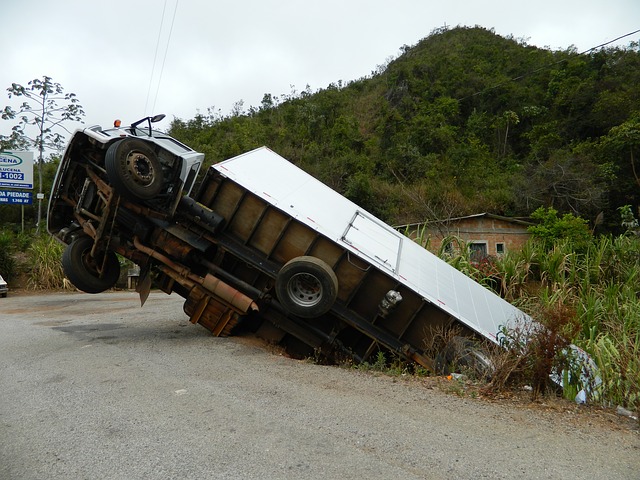
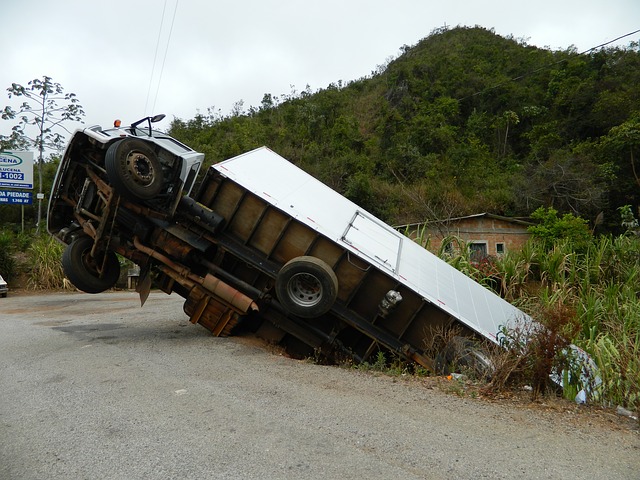
Excessive cornering speed, tripping, collisions, and critical slopes can all contribute to rollover accidents. SUV rollovers and van rollovers are very common, but big rigs and tractor trailers are also at substantial risk for rollover accidents. Large commercial trucks are especially vulnerable to rollover accidents for number reasons:

1) Truck drivers cover many miles of road in their trucks. Since truck drivers are on the road more often, they're naturally a more at risk for Florida car accidents and truck accidents than drivers who drive less frequently. The sheer amount of time spent on the road increases the likelihood that a rollover or other type of Florida truck accident will happen.

2) Trucks are top-heavy. Commercial trucks are designed to carry enormous amounts of cargo, and are often very tall in order to accommodate cargo. Even with a wide wheel track and large wheels, this tends to make trucks very top-heavy and therefore more likely to rollover.

3) Trucks carry heavy, sometimes-unstable loads. A fully loaded truck can weigh many tens of thousands of pounds, and this puts additional pressure and weight at the top of the vehicle, which makes trucks even more top-heavy. As well, cargo may be incorrectly secured, making it shift and making a rollover more likely. In situations where a load is incorrectly secured, there may be multiple liable parties in the event of a truck accident. In some cases, such as when transporting live animals, securing a load so that it does not shift is almost impossible, and increases the risk of a rollover.

4) Truck drivers are under pressure to make deadlines. Truck drivers often need to make certain runs within a certain time limit in order to get their cargo to a destination on time. The additional pressure can encourage drivers to speed, and speeding is a leading cause of rollovers.

5) Tire problems. Trucks, due to their size and weight, place a great deal of pressure on their tires, and this causes to wear down and malfunction more frequently, especially if tires are not maintained correctly or if a truck is carrying too much weight. When Florida tire blowouts or tire problems take place, it is possible for rollovers to occur.

Truck rollover accidents are usually deadly. A truck that has rolled over can obstruct traffic and even cause secondary Florida car accidents. A truck that has rolled over can also easily ignite, especially if the truck is carrying flammable materials. If a truck rolls over into oncoming traffic or into other lanes, other cars are likely to be crushed or severely damaged due to the sheer size of the vehicle. Even though truck drivers are shielded in the cab of the truck, the force and impact of a rollover can lead to serious injuries for a truck driver. Spinal cord injuries and brain injuries are just two of the serious injuries which can occur with a truck rollover accident.

Continue reading "Truck Rollover Accidents in Florida " »

April 29, 2011

Truck Weight Regulations and Florida Truck Accidents

One of the reasons why trucks are so dangerous and contribute to so many Florida car accidents each year is the sheer weight of the vehicles. The large size and weight of commercial trucks such as tractor trailers or semi trucks makes these vehicles unwieldy and slow to respond on the road. In the case of an accident, even small mistakes can lead to serious injuries. As well, drivers of these vehicles are often limited in their ability to drive defensively; since commercial trucks respond far more slowly than passenger vehicles, it is harder to avoid an accident.

Congress passed laws in 1973 to make trucks safer and to reduce the risks of truck accidents. One of the laws restricted the size and weight of loads. For travel in between states, load weights were limited to 40 tons (80 000 pounds). However, overweight permits and oversize permits are available to permit larger trucks on the road in certain circumstances. As well, the weight limits for steer axles are 12 000 pounds while the limits of dual axles are 34 000 pounds and the limit on single axles is 20 000 pounds.

There are federal limits which limit the size as well as the weight of trucks. On all federal highways, trucks can tow 2 trailers of 28 feet or one trailer of 48-feet. Trucks must be no wider than 102 inches on these roads.

States have their own rules and limits on truck weights, as well. Some states, for example, impose seasonal weight limits. Michigan is one such state. Other states allow some oversize trucks or overweight loads, as long as truck carriers meet specific safety requirements.

The reason for these federal and state weight limits is simple. The heavier a truck is, the greater a danger it is on the road. This is because in a truck accident a heavier truck creates a greater impact upon collision and is therefore more likely to cause serious damage and possible fatalities. As well, heavier trucks are more likely to rollover and are more difficult to manage, making it more likely that even an experienced truck driver will be in an accident. Finally, heavier trucks cause more wear on tires and brakes, making it more likely that these systems will fail prematurely.

To enforce federal and state weight limits, there are weight stations in every state. Trucks are supposed to automatically stop at these stations when the stations are open to allow authorities to check for weight violations. Unfortunately, some trucks continue to flout the rules and avoid the weight stations, creating unnecessary danger on the roads.

Continue reading "Truck Weight Regulations and Florida Truck Accidents " »

April 27, 2011

Why Are Trucks So Dangerous?

Many experts agree that large commercial trucks are the most dangerous vehicles on the road. These vehicles cause many Florida truck accidents every year. There are many things that make them so dangerous:

1) Their size. Trucks are very large and this means that they can block visibility on the road. Driving behind a truck in a passenger vehicle means that you cannot see well ahead of you or anticipate dangers on the road. The size of trucks also makes them deadly in an accident, as they can easily crush smaller vehicles – and the passengers inside them.

2) Their weight. Fully loaded commercial trucks can weigh tens of thousands of pounds. This makes them dangerous as it causes them to accelerate down hills and increases the risk of Florida rollover accidents. The heavy weight of trucks also means that in an accident they can easily crush smaller cars.

3) The limited visibility. Trucks have multiple blind spots. This means that drivers are not able to see and anticipate cars around them. The multiple blind spots on trucks makes it especially important that other drivers maintain a safe distance from these large vehicles.

4) Their slow response times. Due to their size and weight, trucks take longer to get up speed and take much longer than passenger vehicles to slow down and brake. This means that they often cannot act quickly enough in time to prevent a Florida car accident, making it crucial that other drivers leave adequate distance in front of trucks.

5) Their loads. Many trucks carry dangerous loads, including hazardous materials, flammable substances, and toxic products. In cases where these loads spill, it can cause severe health and environmental hazards. As well, if loads are not correctly secured, shifting loads can cause rollovers and accidents.

Continue reading "Why Are Trucks So Dangerous?" »

March 7, 2011

Why It’s Not Enough to Focus on Commercial Trucks When Trying to Prevent Florida Truck Accidents

When most news programs report on truck accidents, they report on commercial trucking accidents. It is true that commercial trucking accidents are often very serious or fatal due to the large size of the vehicles. As well, commercial trucking accidents usually are legally very complex, since there are usually a few liable parties.

However, there are other types of Florida trucking accidents which receive less attention but which can still cause fatalities and serious injuries. For example, much less is written about rental truck accidents, although this is a topic that deserves serious attention. Many companies rent trucks – even large trucks – to customers without truck driving licenses. In many cases, these trucks are rented to individuals who are moving. Lately, even building supply stores have been offering short-term truck rentals to customers who want to get building supplies home.

Unfortunately, truck rentals pose quite a few problems. In most cases, drivers who have driven nothing but passenger vehicles are allowed to drive these trucks – some of which can be quite large and unwieldy – with no training, instruction, or help. While rentals no doubt save customers money, many experts do not think they are safe. Due to the fact that customers renting these large trucks do not have experience with larger vehicles, it can mean that even good drivers with no record of Florida car accidents can easily get into a collision with these trucks.

The safety record and maintenance of these trucks has also been an issue. Several investigative journalists have looked into the safety records of trucks offered for rent in this manner and have found all sorts of troubling problems. Some investigative journalists have discovered aging fleets while others have found that trucks cannot pass a mechanic's inspection. Lawsuits and claims that these companies know about mechanical problems just add to the issue.

Another common problem is the prevalence of light trucks and the role they play in accidents. More drivers and car buyers are selecting light trucks when buying a vehicle. In fact, in some cases, buyers say that the perceived safety advantages of these trucks influence their buying decisions. However, light trucks still can and do mean Florida truck accidents. These trucks can mean more blind spots when compared with passenger vehicles. Some light trucks also have high rollover rates and other known problems, all of which can contribute to Florida truck accidents.

Continue reading "Why It’s Not Enough to Focus on Commercial Trucks When Trying to Prevent Florida Truck Accidents" »

December 27, 2010

Florida Truck Rollovers are a Common and Deadly Traffic Hazard

According to a report published by the Florida Department of Transportation, 50% of Florida truck accident fatalities involving heavy trucks take place because a truck has rolled over. In fact, the report points to Florida rollover accidents as a leading hazard on Florida roads. The trucks were disproportionately involved in multi-vehicle accidents, but the heavy trucks were at fault only about 30% of the time, according to the Florida Department of Transportation report.

The report published by the Florida Department of Transportation concluded that heavy trucks were more likely to be at fault in Florida car accidents involving rear end collisions as well as in off the road and intersection collisions. In 28% of Florida car accidents involving heavy trucks, side and rear underrides were blamed for the fatalities.

In cases where car defects (other than Florida tire defects) were involved, more than half of the defects belonged to the heavy trucks rather than to the passenger vehicles involved in the collisions. This means that heavy trucks are disproportionately affected by defects, since heavy trucks only make up about 17% of the vehicles involved in the accidents studied by the Florida Department of Transportation.

The report by the Florida Department of Transportation also considers the ways that alcohol and drugs, road conditions, and driver age affect Florida truck accidents. The full report is more than 500 pages long and provides a unique glimpse into the Florida truck accident issue. The full report can be viewed by visiting the Transportation Research Board Web.

Continue reading "Florida Truck Rollovers are a Common and Deadly Traffic Hazard " »

December 3, 2010

Some Florida Truck Accidents Occur During Loading and Unloading

When people imagine a Florida trucking accident, many imagine a high-speed collision on the highway. However, many Florida personal injuries and even fatalities involving trucks do not even involve a moving truck. The loading and unloading of a truck is hazardous and leads to many workplace accidents involving trucks. These forms of injuries can often be prevented by:

1) Loading on a level and stable area. Unevenness or movement can cause serious slip and fall injuries. It is important to block the wheels and set the brakes to prevent the truck from moving as well. The area should also be well-lit and supervised, to ensure that no one is behind the trailer during loading and unloading.

2) Checking ramps. Ramps should be stable and secure, not moving about. They should also be free of debris, grease, mud, and ice. Many workplace Florida slip and fall accidents occur on ramps that are unstable or covered with a substance or debris that poses a hazard.

3) Loading the correct amount. Loading more in weight or volume than a truck is capable of holding makes the truck more prone to rollovers and accidents, so it is important to adhere to any documentation about weight and load restrictions.

4) Securing loads correctly. Locks, wires, cables, or chains can be used to secure loads in place. When loads shift during transport, the weight distribution shifts, paving the way for a Florida truck accident when the truck loses control. It is important to ensure that all loads are secured well, so that they will not shift or move, even on hills and uneven ground.

5) Checking the condition of the truck. Loading and unloading is the perfect time to check the truck for any maintenance problems. Any signs of issues with tires, brakes, lights, and other important systems should be reported and fixed before the truck driver proceeds with delivery. When a truck is in poor condition, it may respond more slowly, potentially leaving the truck driver unable to prevent collisions.

Continue reading "Some Florida Truck Accidents Occur During Loading and Unloading " »

July 21, 2010

Speeding and Truck Accidents

A group of researchers at the School of Public Health at the University of Illinois, Chicago have found that since a federal speed limit of 55MPH was repealed in 1995, US interstates have seen an increase in car accidents and injuries as well as fatalities. Researchers concluded that about 12,545 deaths and 36,582 in truck accidents and car accidents across the nation were attributed to higher speed limits between 1995 and 2005. Researchers suggested that a camera network and lower speed limits would decrease fatalities again. Results of the study were published in the American Journal of Public Health.

Speeding is a serious problem in many traffic accidents; many Florida bicycle accidents, car accidents, and pedestrian accidents are caused at least partly by speeding. However, speeding is an especial concern in Florida trucking accidents. Due to the size of trucks, when trucks drive at an excessive speed and collide, they can produce a lot of force and cause a great deal of damage.

Speeding while driving a truck is dangerous for many reasons:

1) It leaves the truck driver with less time to stop. Trucks require more time than passenger vehicles to slow down and stop, and when drivers speed, there is often no time or space to stop safely. Speeding ensures that drivers cannot respond in a timely fashion.

2) It can make minor obstacles fatal. Any minor obstacles – such as a sudden slippery spot or a pedestrian suddenly in the road – can be dangerous for a truck driver going a safe speed. A speeding truck driver simply cannot adjust his or her driving in time to account for these sudden obstacles.

3) A speeding truck may lose control more easily. A fully loaded truck that is speeding is far more likely to roll over than a truck going at a safe speed. Speeding puts more stress on the entire truck, and may cause mechanical failures that lead to a disastrous accident.

4) A speeding truck can create a wind force that is dangerous on the roads. If a truck is speeding and passes a bicyclists, pedestrian, or motorcycle too closely, the force of the wind and speed can push a bicyclist or pedestrian back and cause injuries.